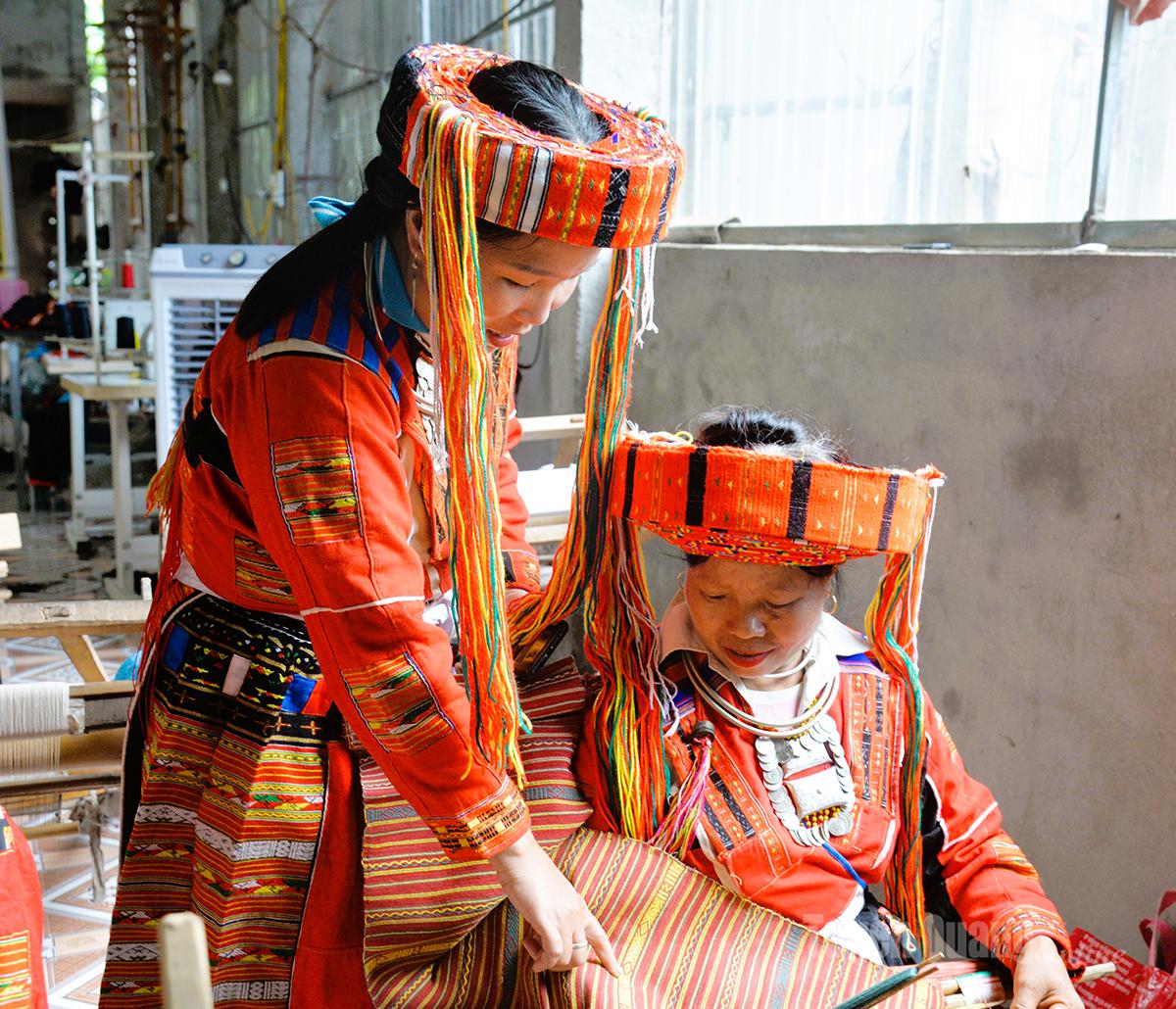
Tai Thi Mai (left), Director of Tan Bac Pa Then Brocade Cooperative, inspects brocade products.
The Soul in Every Thread
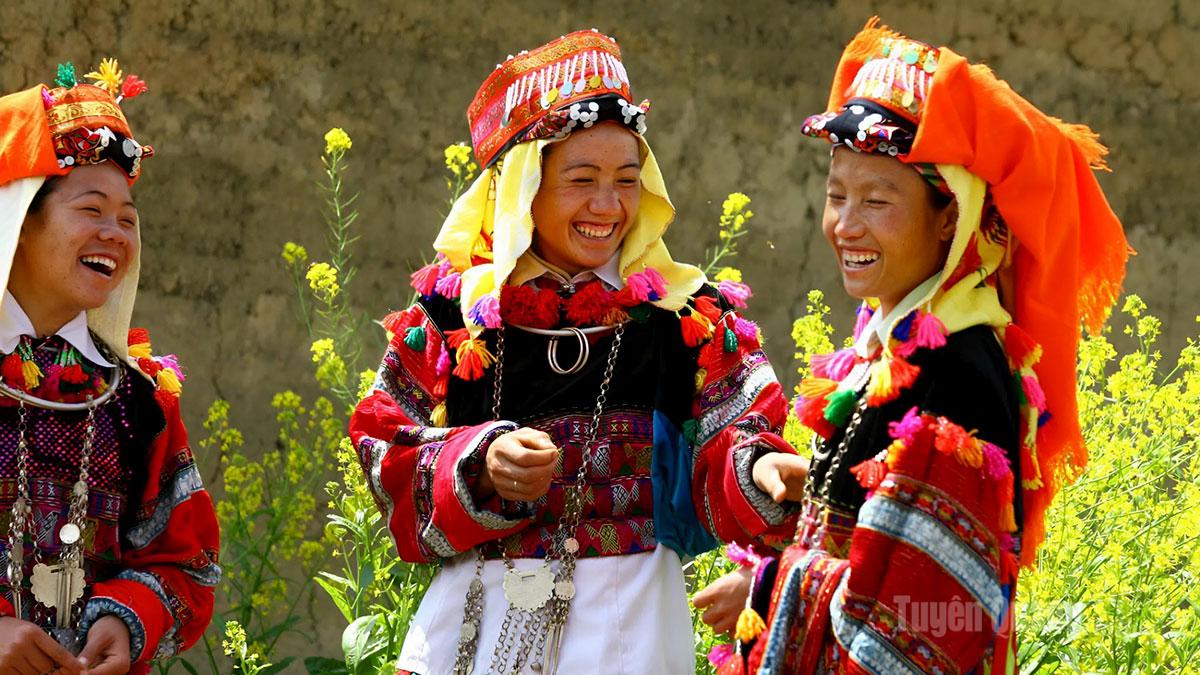
For the Pa Then, brocade weaving is not merely a craft but an inseparable part of their cultural and spiritual life. From an early age, girls are taught by their mothers and grandmothers how to spin thread, set up the loom, and weave fabric. Over generations, the craft has been passed down with love and profound pride.
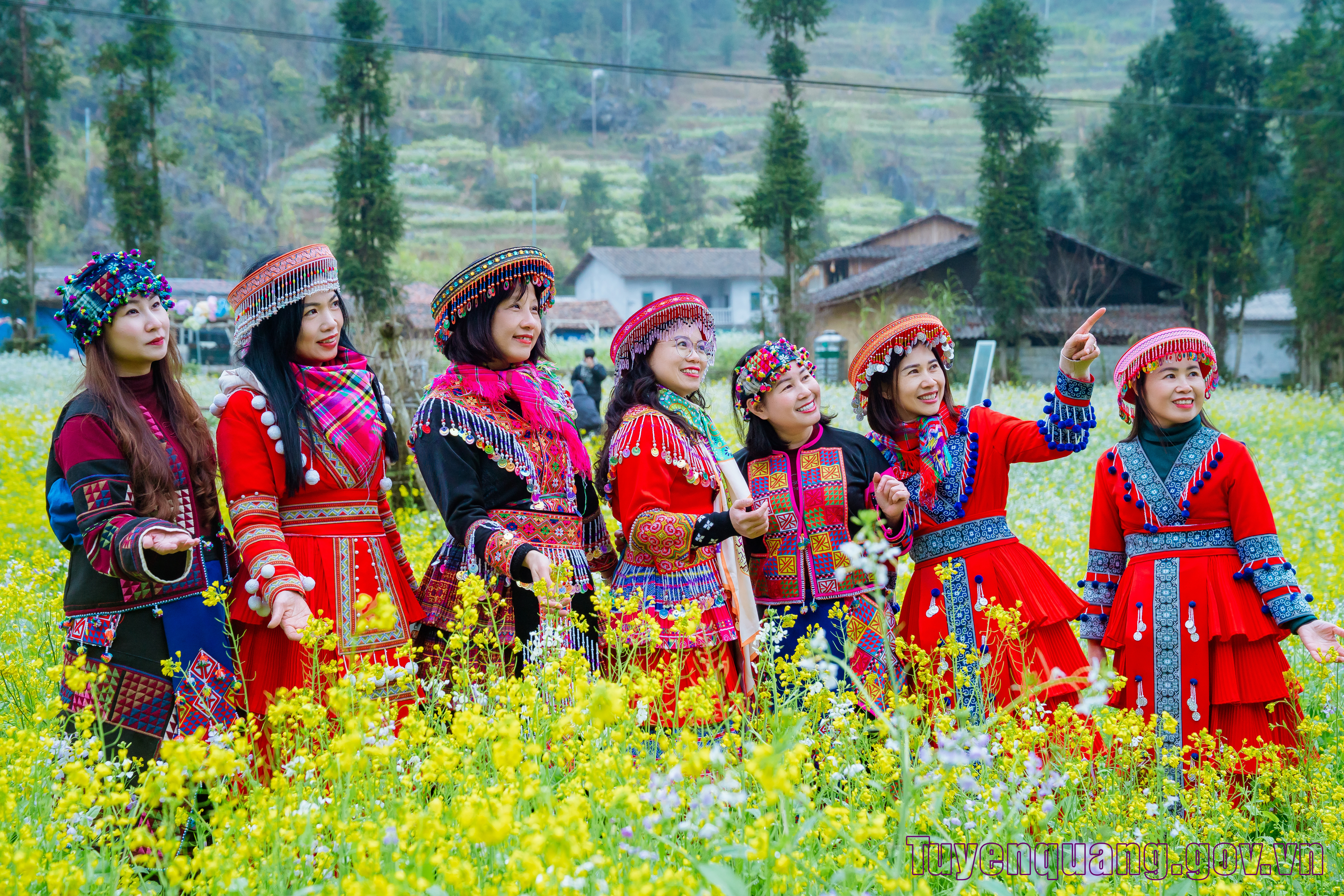
Rooted in the belief that red is the color of fire, faith, and light - and that the fire god is their most sacred deity - Pa Then women weave their traditional attire with red as the dominant color. The symbolic motifs on their clothing are closely tied to daily life and spiritual beliefs, depicting patterns such as human heads, lozenges, water snakes, dogs, and the letter A. Each outfit is clearly distinguished by age group - children, young women, brides, married women, and elders - creating a unique cultural identity.
“I learned to weave when I was eight or ten years old. In those days, every Pa Then girl had to weave her own skirts and blouses before getting married. The fabric she made with her own hands was considered her most precious dowry. Now, even at over 60 years old, I still actively participate in the Tan Bac Pa Then Brocade Cooperative to inspire and guide the younger generation in preserving and developing this traditional craft,” said artisan Xin Thi Lo from My Bac hamlet.
Brocade Taking Flight
Since 2017, brocade weaving has been revitalized through the Tan Bac Pa Then Brocade Cooperative in My Bac hamlet. To support its growth, local authorities have provided machinery and equipment, organized vocational training classes, arranged study tours to successful models, offered preferential loans, and facilitated market access and product promotion workshops in many provinces and cities.
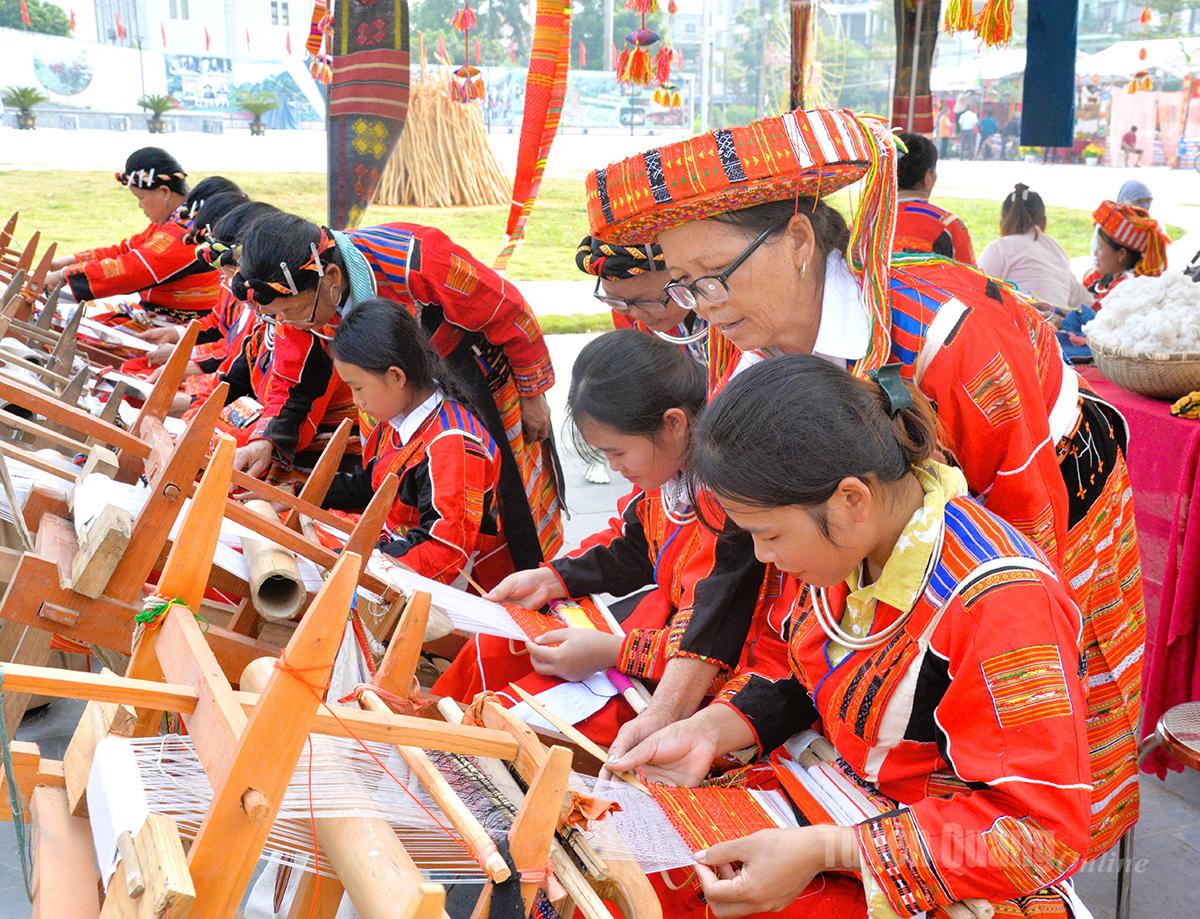
Artisans from My Bac hamlet, Tan Bac commune, passing down the Pa Then brocade weaving craft to younger generations.
This year, with support from a project by Good Neighbors International, the Cooperative is fulfilling an export order of 1,000 brocade products to South Korea, including 500 scented sachet keychains and 500 ATM and ID card holders. In addition, the Cooperative has effectively used social media platforms like Zalo and Facebook to livestream sales and promote its products. As a result, Pa Then brocade has gained increasing popularity, particularly among tourists from Japan, the UK, and the US.
“Each brocade product is like a cultural ambassador of the local community. That’s why, in addition to aesthetics and practicality, we place the highest priority on quality, with every item labeled and barcoded for traceability. Our products are diverse, including skirts, blouses, scarves, hats, handbags, and souvenirs, with prices starting from 25,000 VND (about 1 USD), while a full women’s outfit can cost up to 5 million VND (about 200 USD),” said Tai Thi Mai, Director of Tan Bac Pa Then Brocade Cooperative.
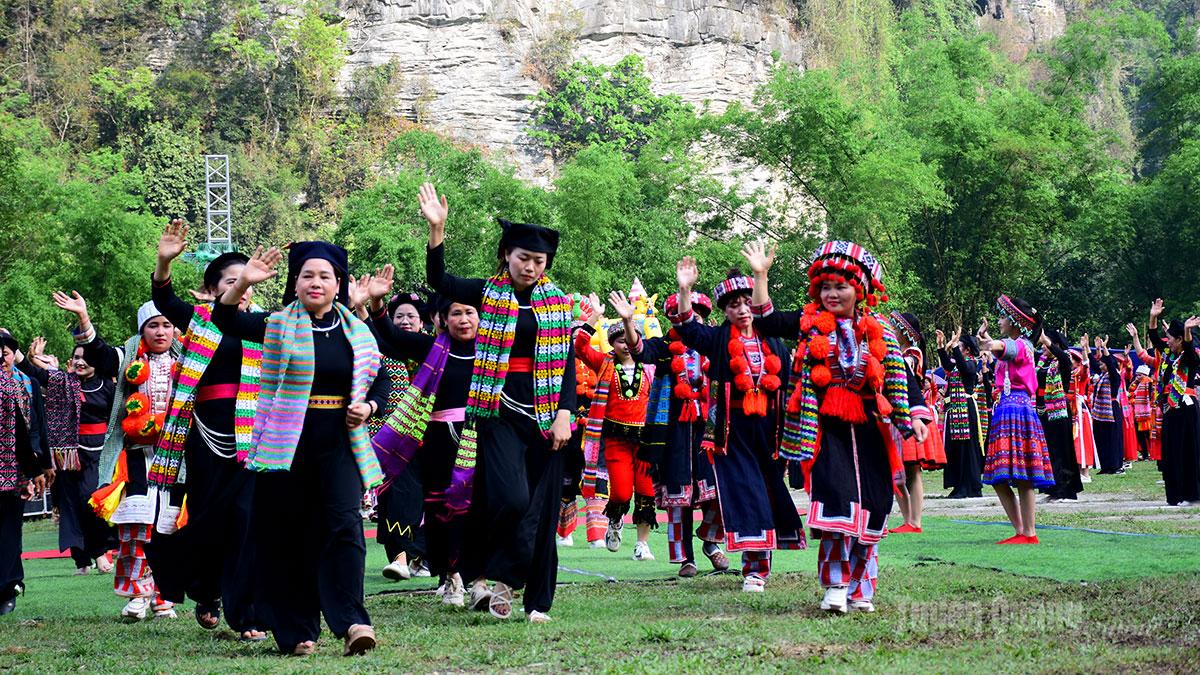
“The Pa Then are among Viet Nam’s smallest ethnic groups, living mainly in this commune with a population of over 5,000. Every year, the commune maintains the Pa Then Fire Dance Festival in combination with brocade weaving experiences for visitors. We will continue to advise local authorities on promoting the craft’s strengths, linking it with community-based tourism, developing OCOP products, and supporting e-commerce connections to give Pa Then brocade even greater vitality,” said Luong Thi Kiem, Head of the Culture and Society Office of Tan Trinh commune.
Nguyen Thanh Hieu
Vietnamese data source: Bao Tuyen Quang