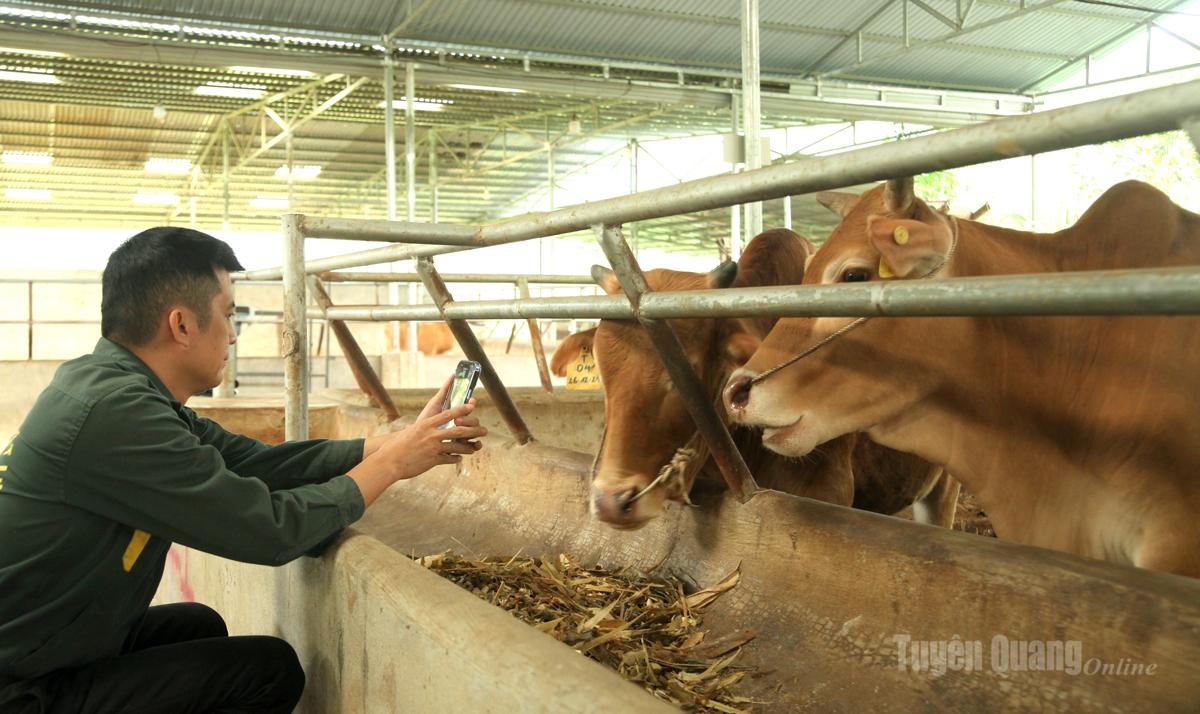
Tagging origin traceability at Cat Ly Cooperative
Systematizing Genetic Assets via Field Data
H’Mong Yellow Cattle are recognized as a unique genetic asset of the highland region; however, their commercial value has historically lagged behind their potential. Recently, South Korean experts conducted on-site technical assessments in Thuan Hoa Commune, focusing on deciphering growth indices and marbling scores of the local herd.
The anchor for this strategy is Cat Ly Cooperative, a professional operation with a supply chain linking 1,300 households. With an annual supply of over 77 tons of fresh beef to supermarket systems and retail outlets, Cat Ly is running a closed-loop value chain from farming and slaughtering to processing. However, to optimize profit margins, the adoption of international protocols, specifically in nutritional formulation and disease control based on KOICA standards, is considered the pivot point for quality enhancement.
From Subsistence Farming to Commodity Supply Chain
The international cooperation program drew representatives from local authorities and leading livestock farmers from the villages of Bach Dich, Thang Mo, Mau Due, and Yen Minh. The strategic objective is to shift the production mindset from subsistence to large-scale commercial output. By introducing the high-value Hanwoo model, local farmers are gaining direct access to advanced breeding selection and marbling enhancement techniques, the key metrics for premium-segment pricing.
According to experts, mastering these advanced livestock technologies is the "make-or-break" factor for the H’Mong Yellow Cattle brand to meet stringent market requirements. With a foundational herd of nearly 4,000 cattle, standardizing the process from breeding selection to scientific fattening is not only boosting income for 1,300 affiliated households but also serving as a vital premise for Tuyen Quang beef to compete and assert its position on the global agricultural map.
Nguyen Thanh Hieu
Vietnamese source: Tuyen Quang online