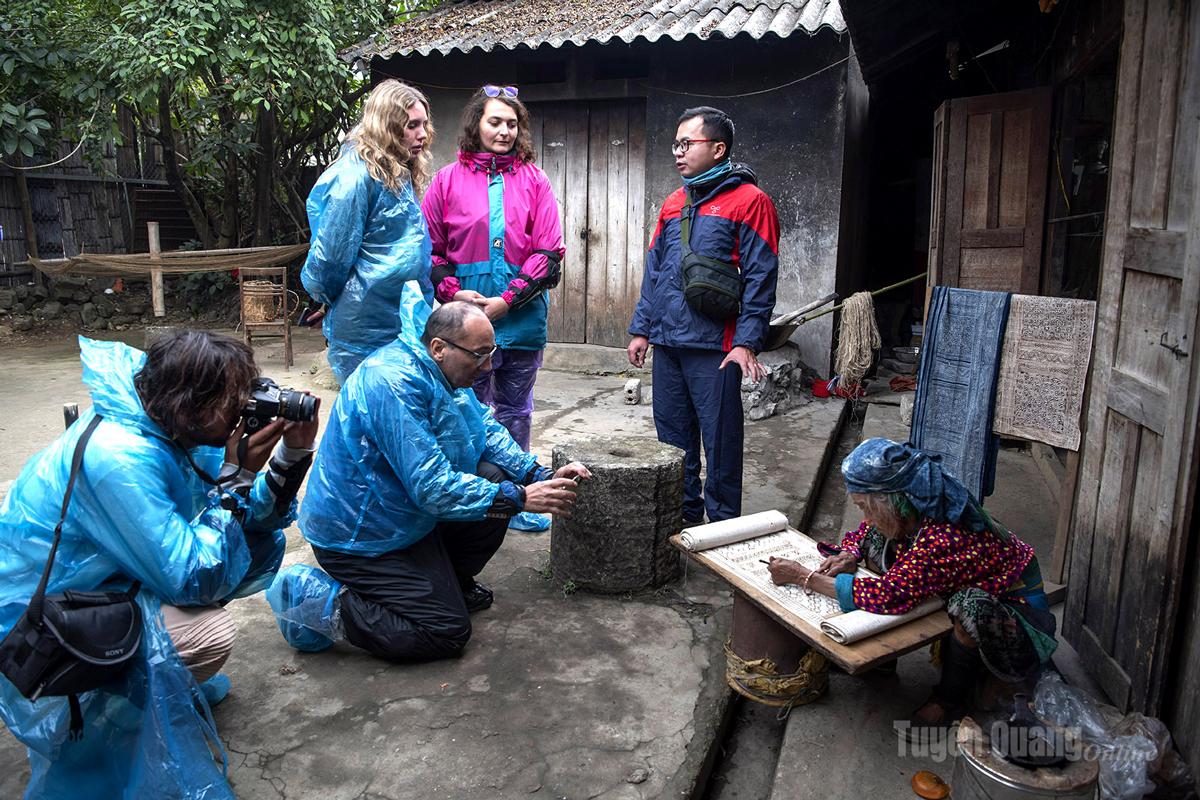
Foreign visitors curiously exploring the intricate art of H'Mong beeswax drawing
This is not merely a craft; it is an art form - beeswax drawing - which has followed the H’Mong through generations as a way to preserve their identity amidst the harsh rocky terrain.
In Pa Then Tourism Cultural Village (Lung Cu Commune), the craft of beeswax drawing is no longer confined within the household; it has evolved into a unique experience for visitors. Small traditional houses have become welcoming spaces where tourists can not only observe but also touch, try, and understand a profound part of H’Mong cultural life.
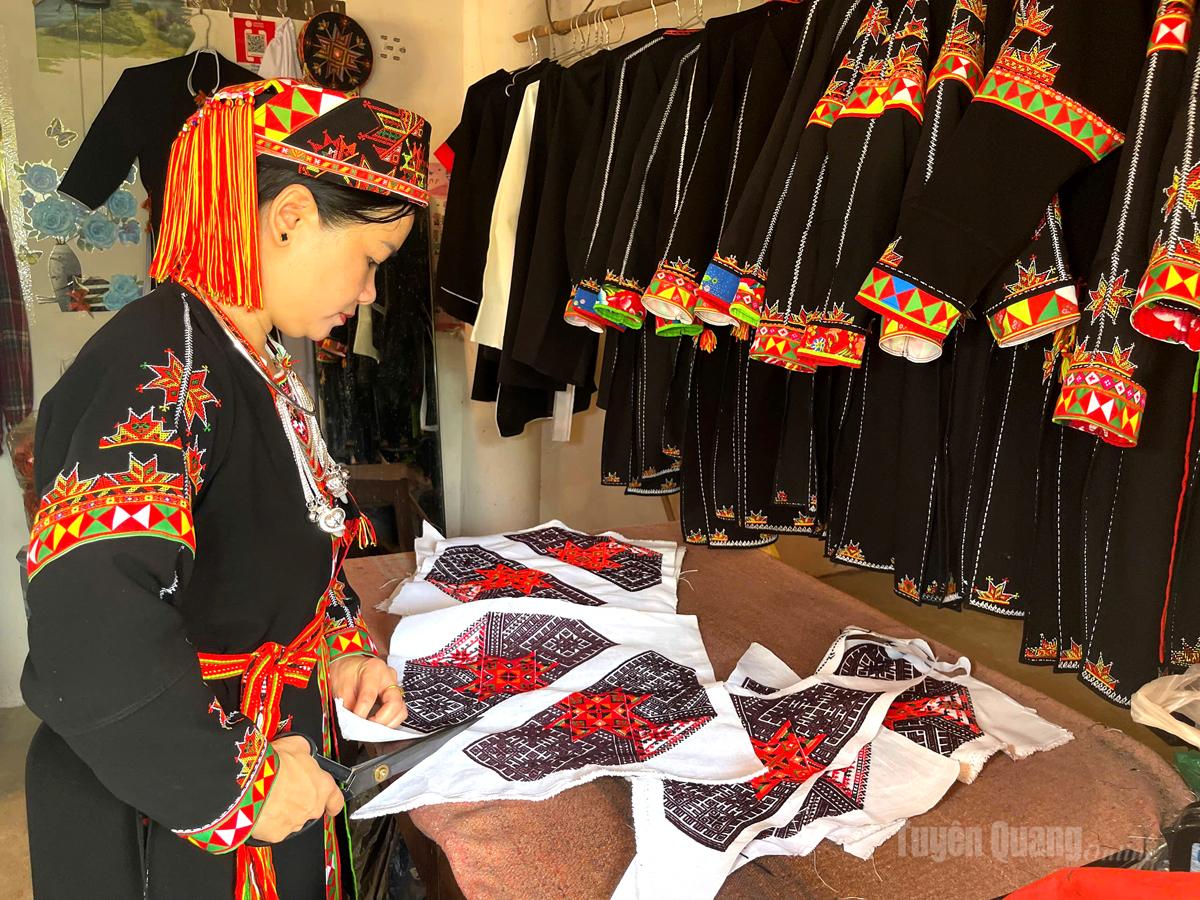
In H’Mong life, beeswax drawing is more than a pattern-making technique; it is an integral part of the rich visual system on their attire. Geometric motifs such as diamonds, zigzags, and spirals are meticulously arranged in vertical and horizontal layouts, creating aesthetic beauty while conveying concepts of the universe, humanity, and life. On hemp, each stroke is not just decoration but a continuation of memory - the way the H’Mong preserve their identity across generations.
Beside the hearth, an artisan patiently guides visitors through every movement. With one hand holding a copper pen and the other steadying the hemp, each line is drawn slowly and steadily. Molten wax spreads along the strokes, creating intricate patterns - diamonds, crosses, or undulations - each carrying the unique significance of a particular clan.
The scent of beeswax mingling with the highland chill creates a singular sensation. Some say that merely sitting by that hearth is enough to understand why this craft has endured so resiliently.
Following the drawing stage is indigo dyeing - another journey of patience. The hemp is submerged in indigo vats, then dried, and submerged again. Each time, the blue deepens, soaking into every fiber. When the beeswax layer is heated for removal, the patterns emerge vividly against the indigo background, like imprints of time and human craftsmanship.
Mr. Jason Le, a European tourist visiting Pa Then Tourism Cultural Village for the first time, shared that he never imagined a piece of cloth could hold so many stories. “I don’t just see the patterns; I feel the patience, the meticulousness, and the soul of the maker. This is not just a product; it is culture,” he remarked.
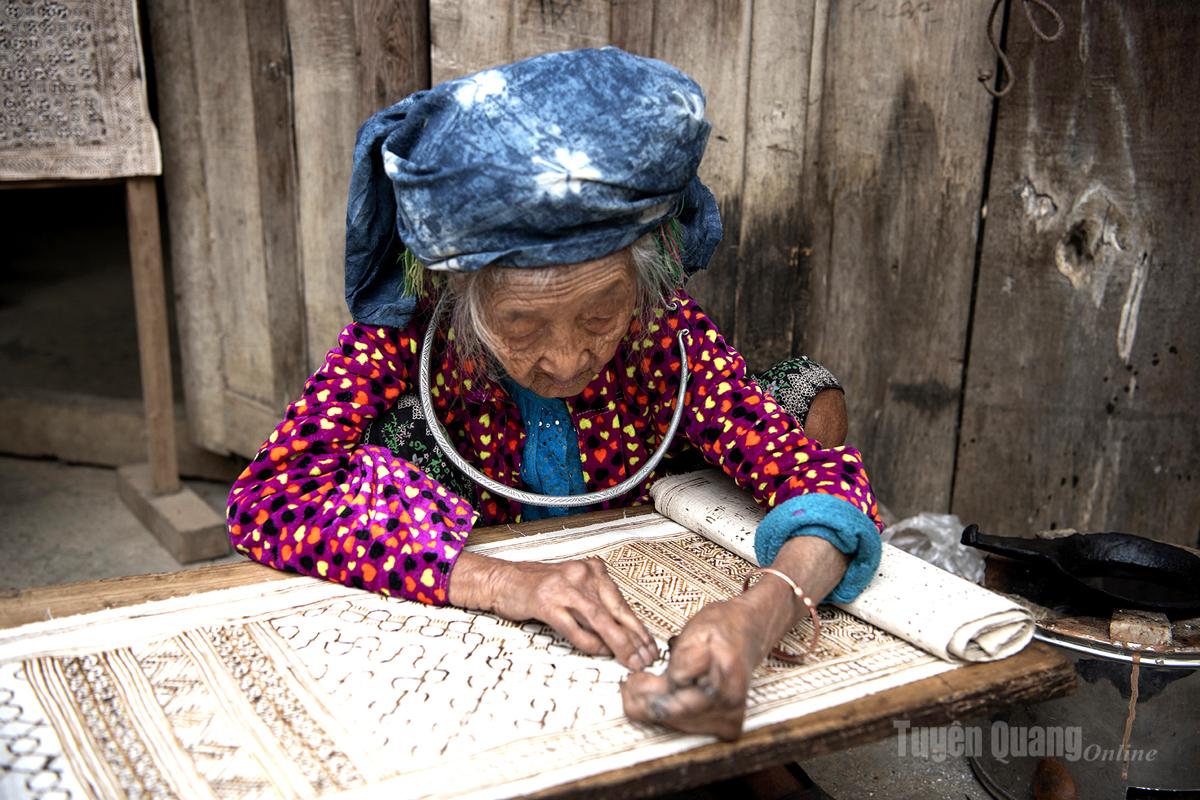
A H'Mong artisan meticulously traces beeswax patterns on hemp, preserving the traditional motifs of her people
In Pa Then Village, locals are becoming accustomed to welcoming guests. Women draw while chatting, explaining the meaning of each motif and how they learned the craft from their mothers and grandmothers. These stories are unwritten, yet they are transmitted through sheer experience.
Many visitors come not to buy a product, but to “live” within that space - to understand why a craft can remain so deeply intertwined with a people for so long.
The combination of beeswax drawing and indigo dyeing creates a complete experiential cycle. Visitors can hand-make a small piece of hemp to take home - not as an expensive gift, but as one imbued with emotion, something that mass-produced items can never offer.
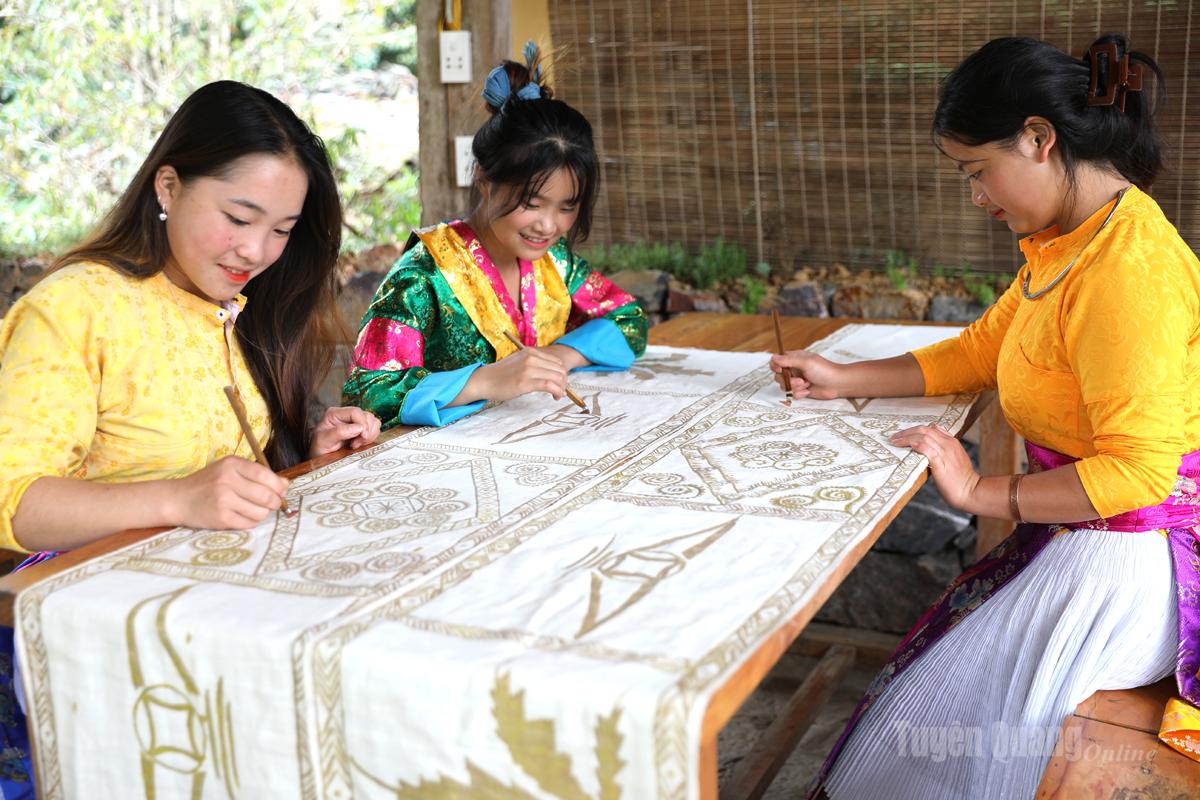
Young H’Mong women in Pa Then Village (Lung Cu) continuously maintain and preserve their ethnic batik heritage
Amidst the sharp, cold limestone and winding roads, such warm spaces remain - where the hearth fire not only thaws the chill but also preserves a part of the H’Mong soul. Beeswax strokes, seemingly fragile, endure through time - not only on hemp, but in the memories of all who visit.
And perhaps, that is what draws many visitors back - not just to watch, but to once again sit by the hearth and silently listen to the stories of the stone mountains and the people, told through simple yet profound strokes of beeswax.
Nguyen Thanh Hieu
Vietnamese source: Tuyen Quang online