Strengthening Household Waste Management
Alongside rapid industrialisation and urbanisation, environmental pressures in Tuyen Quang continue to increase, particularly in the management of household waste. According to the Department of Agriculture and Environment, the province generates approximately 1,050 tonnes of municipal solid waste each day. However, only around 526 tonnes are currently collected and treated daily. Waste collection coverage reaches approximately 95% in urban areas, while the rate in rural areas remains at around 40%.
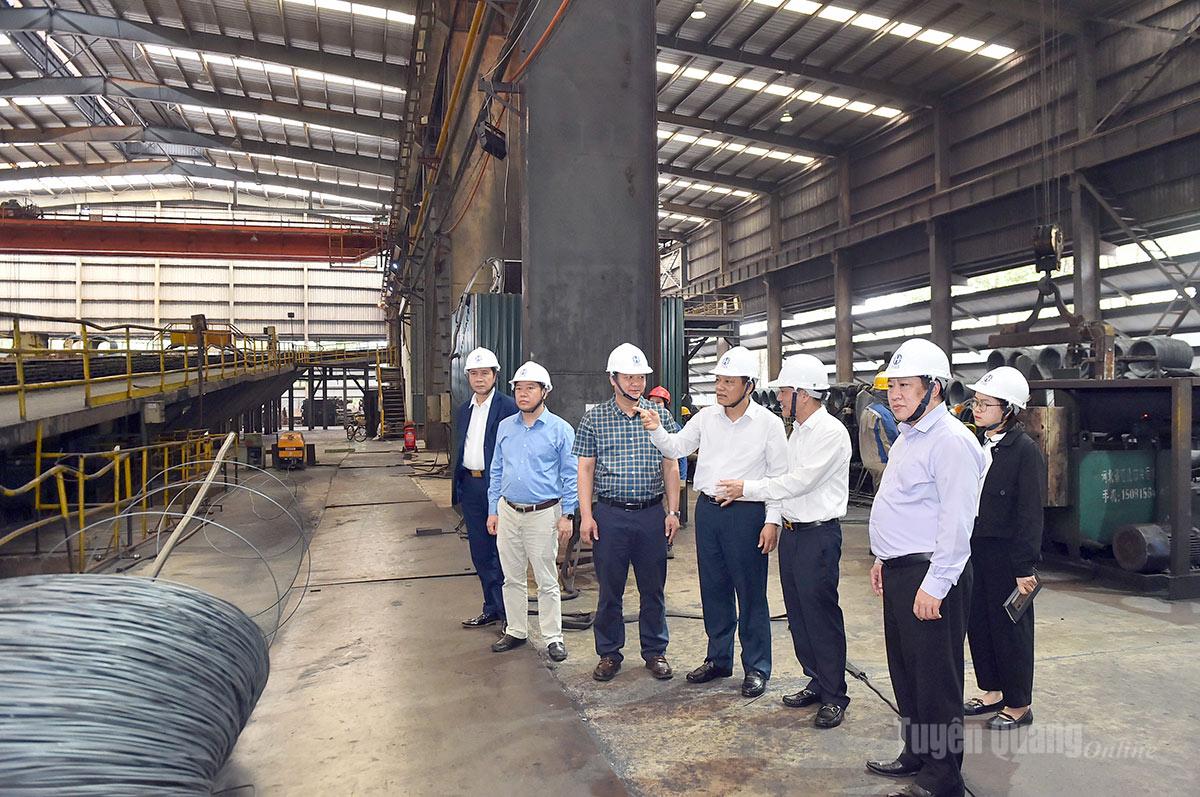
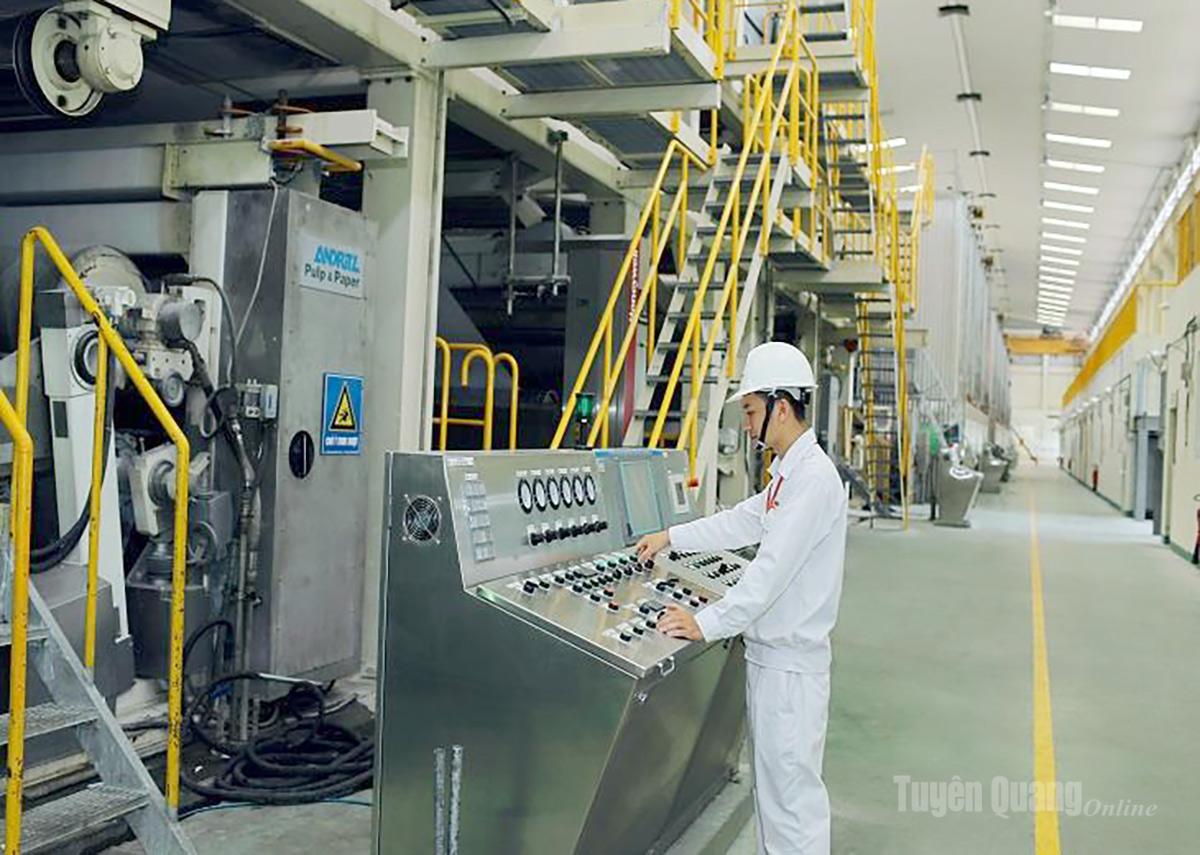
Leaders of the Provincial Industrial Parks and Economic Zones Authority inspect the working environment and production activities at Tuyen Quang Iron and Steel Company
At present, landfilling remains the primary method of household waste disposal, with only a small proportion treated through incineration. The province has 33 municipal solid waste landfill sites, but only 17 meet sanitary standards. In addition, the effectiveness of the province’s nine waste incinerators remains limited due to insufficient operating funds.
In response, Tuyen Quang is implementing a range of measures to improve waste management, collection and treatment. Priority is given to public awareness campaigns and community-wide environmental protection initiatives; maintaining regular environmental clean-up activities in residential areas, government offices and public institutions; and gradually introducing waste segregation at source while reducing the use of non-biodegradable plastic bags and single-use plastic products.
The province aims to achieve household waste collection and treatment rates of 95% in urban areas and 90% in rural areas by 2030. It also seeks to reduce direct landfilling to below 50%, upgrade more than half of all non-sanitary landfill sites, and completely eliminate illegal dumping sites that cause environmental pollution.
During the 2026-2030 period, Tuyen Quang prioritises investment in modern infrastructure for waste segregation, collection, transportation and treatment, while promoting recycling and energy recovery. The province also accelerates the application of digital technologies, artificial intelligence (AI), the Internet of Things (IoT) and big data in waste management and monitoring systems.
Tightening Controls on Industrial Discharges
In addition to the growing challenge of household waste, environmental protection efforts in Tuyen Quang face increasing pressure from industrial and production activities. The province is home to one economic zone, two industrial parks, eight industrial clusters, 51 traditional craft villages, more than 200 mining operations and over 120 industrial production projects. More than 40 facilities are classified as having a high risk of causing environmental pollution.
According to Trinh Van Binh, Deputy Director of the Department of Agriculture and Environment, the province promotes a proactive environmental management model featuring enhanced early-warning capabilities during the 2026-2030 period, while expanding the application of digital technologies in environmental monitoring.
Large-scale livestock farms are required to install surveillance cameras and automatic wastewater monitoring systems. At the same time, the province develops a digital database on livestock farming environments to support monitoring activities and provide early warnings of pollution risks.
Alongside stricter regulatory oversight, Tuyen Quang encourages the development of a circular economy and the reuse of agricultural waste through biogas systems, biological bedding technologies and the production of organic microbial fertilisers.
Through these comprehensive measures, the province seeks to strengthen environmental governance, improve resource efficiency and advance a greener and more sustainable development model.
Nguyen Thanh Hieu
Vietnamese source: Tuyen Quang online