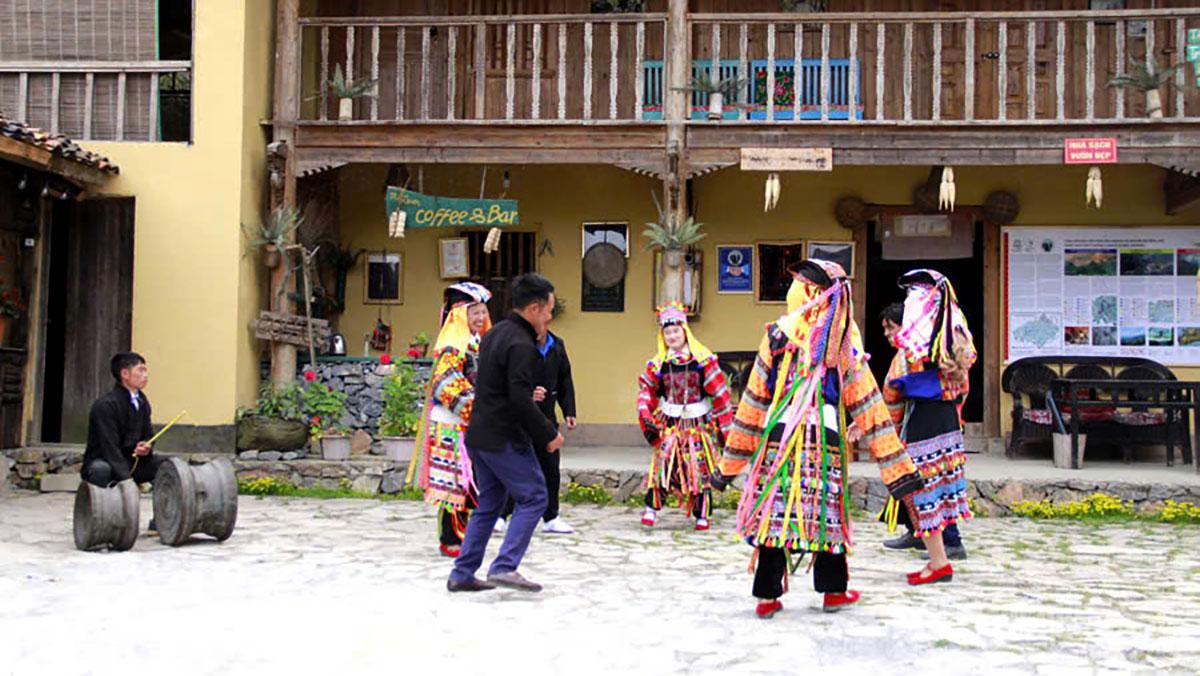
Bronze drums are present in all sacred rituals of Lo Lo Chai village
Bronze Drums in Lo Lo Daily Life
As the first rays of sunlight touch the golden-walled earthen houses in Lo Lo Chai village, Lung Cu commune, mountain mist still lingers along the stone fences. The deep, majestic, and resounding echoes of bronze drums rise from the spacious courtyard of the village cultural house. The sound bounces off rock cliffs, spreads across mountain slopes, and blends into the vast expanse of the karst plateau. To the Lo Lo, this is not just music for a drum dance, but the voice of their ancestors calling back from time immemorial.
As one of Vietnam’s 16 ethnic minorities with a critically small population, the Lo Lo have nevertheless preserved their unique traditional cultural values almost entirely intact. Within this heritage treasury, the bronze drum is revered as the most sacred treasure, a symbol of community cohesion, and the soul of their spiritual life.
For generations, bronze drums have been present in almost all important Lo Lo rituals. These include ceremonies to worship heaven, pray for rain, offer sacrifices to earth deities and ancestors, cleanse the village, or during community gatherings. Whenever the drumbeat sounds, villagers understand that a sacred event is unfolding. The drumbeats guide the rituals, connect humans with deities, and convey wishes for a peaceful life, bountiful harvests, and happy families.
Notably, Lo Lo bronze drums always exist in pairs consisting of a male drum and a female drum. The male drum is smaller and the female drum is larger, symbolizing yin - yang, heaven - earth, and male - female. This concept vividly reflects fertility beliefs and the philosophy of community continuity and growth. Each drumbeat blends together like a symphony of life, where humans find balance between nature and the universe.
Beyond its religious value, the bronze drum is an outstanding work of art. The drum surface features concentric circles, a radiating sun, comb-tooth patterns, stylized human figures, and various motifs deeply imbued with Lo Lo cultural imprints, creating an identity that cannot be confused with any other bronze drum lineage. Each pattern acts like a page of history etched in metal, telling the story of the origins, the journey of survival, and the aspirations to rise of an ethnic group in the rocky borderlands.
Mr. Sinh Di Gai, Head of Lo Lo Chai village, explained: "The bronze drum is, to the Lo Lo, also a measure of the community's longevity. Many families view the preservation of these drums as a matter of family honor and ancestral roots. Ancient drums are carefully preserved, passed down from generation to generation as an invaluable treasure." This exceptional value was further affirmed when a pair of Lo Lo bronze drums dating back to the 5th century - currently kept at the Tuyen Quang Provincial Museum - was recognized as a National Treasure in 2015. This is not only a source of pride for the Lo Lo but also a recognition of a unique cultural heritage of the Vietnamese nation.
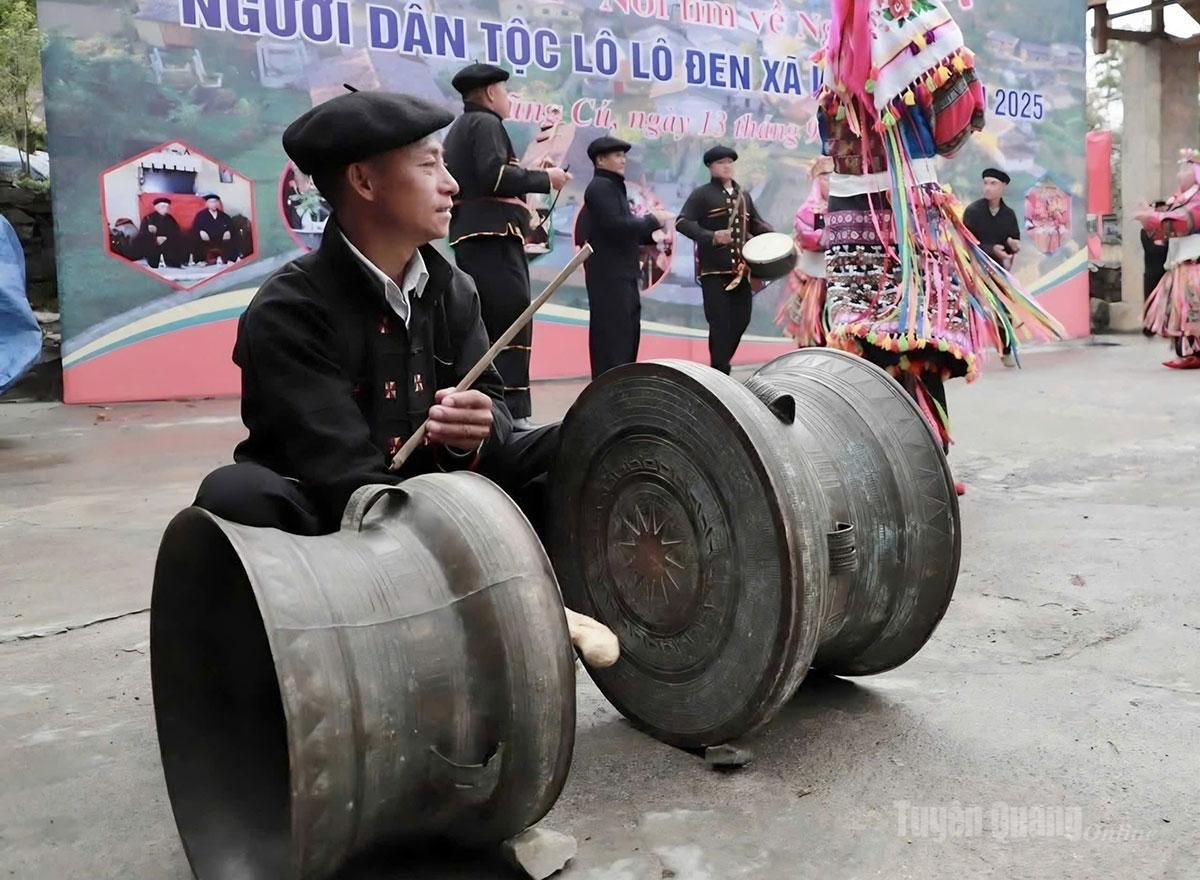
The pair of bronze drums is preserved by the Lo Lo people like a treasure
Drumbeats Guarding the Frontier
In the northernmost land, the sound of bronze drums not only preserves cultural memories but also helps cultivate community awareness, fostering patriotism and the spirit of protecting the border. In Lo Lo Chai, a world-class village nestled at the foot of the Lung Cu Flag Tower, the bronze drums still resonate during cultural festivals, New Year occasions, and community activities. Each drumbeat serves as a reminder to younger generations of their roots, their responsibility to preserve identity, and their duty to protect the homeland at the frontier of the country.
To preserve their ethnic culture, elderly artisans in the village diligently teach the youth how to play the drums. They teach not only the technique but also pass down the meaning of each rhythm, each ritual, and each story associated with the sacred drum, ensuring that the bronze drum heritage is transmitted from generation to generation. Vang Di Dai, a young Lo Lo man passionate about his ethnic culture, has become a successor to the village artisans. He said: "Learning to play the drum is not simply learning a traditional musical instrument; it is learning to listen to the voice of one's own people. Every time the drum resonates, I feel more clearly the bond between the past and the present, between ancestors and descendants."
The vitality of the bronze drums is also demonstrated through innovative approaches to heritage preservation and value promotion. Notably, several community-based tourism models have drawn inspiration from the bronze drum symbol to create unique cultural products, offering visitors a more immersive experience within the Lo Lo cultural space.
In recent years, the annual Lo Lo Ethnic Cultural Festival has created additional spaces for the bronze drums to resonate. Activities such as reenacting rituals, teaching drumming skills, and introducing traditional culture have helped bring the heritage closer to the community and tourists.
From a religious symbol, the bronze drum is becoming a cultural resource for economic development, creating livelihoods for local people. More importantly, however, this process does not erode the original values of the heritage but makes it more vibrant in contemporary life. It awakens age-old cultural values like the heartbeat of the border region, affirming the enduring presence of a community dedicated to guarding every sacred inch of land along the nation's frontier.
Nguyen Thanh Hieu
Vietnamese source: Tuyen Quang online