Green projects leading the way
The commitment to sustainable development is increasingly reflected in the types of projects being welcomed into the province. Priority is given to investments that apply advanced technologies, promote the circular economy and minimise environmental impacts.
One such project is the Tuyen Quang Biomass Power Plant, which broke ground in late 2025 at Xuan Van Industrial Cluster. The facility is designed with a generating capacity of 50 MW and an 11/110-kV, 63-MVA substation, using conventional condensing steam technology with grate-fired boilers. Its defining feature lies in its fuel source: agricultural and forestry by-products collected from across Tuyen Quang and neighbouring areas will be used entirely as biomass fuel.
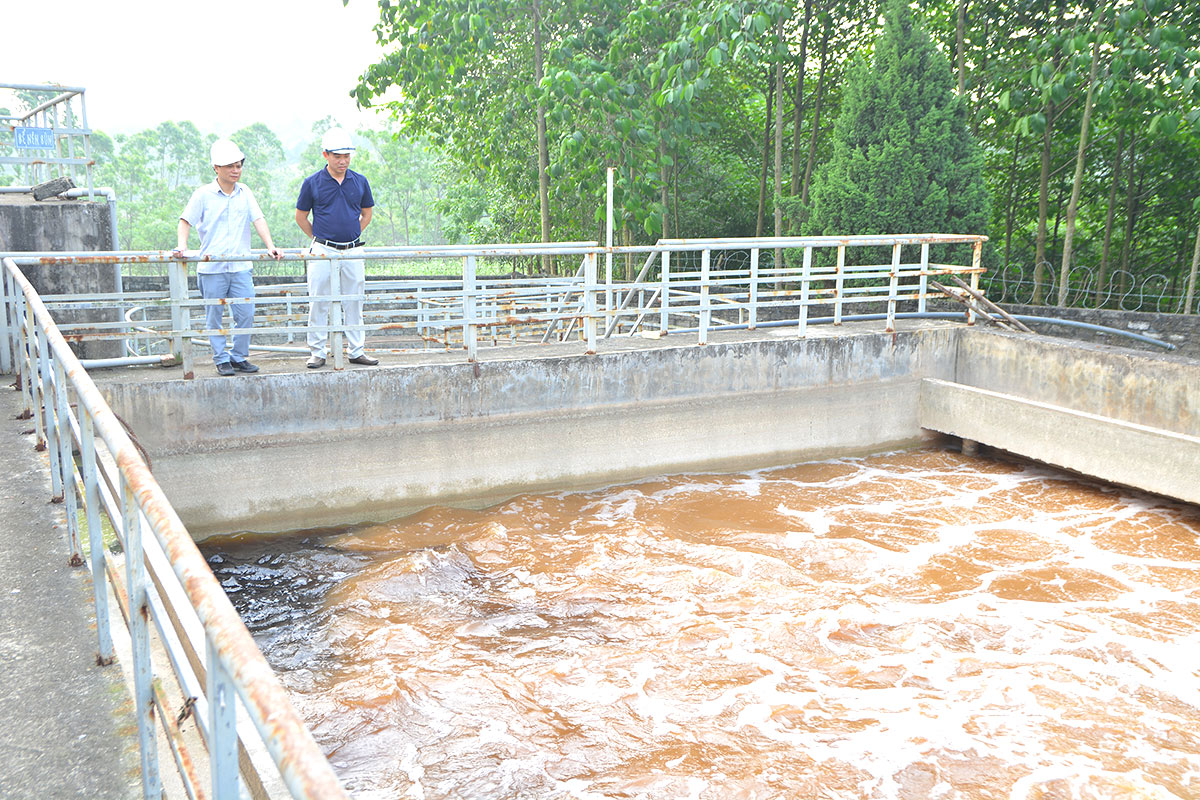
The wastewater treatment system at Son Duong Sugar Factory complies with environmental protection requirements
According to Tomoo Tsuyuhara, Deputy General Director of Erex Tuyen Quang Biomass Power Co., Ltd., land clearance has been largely completed and construction is now under way. Commercial operation is scheduled to begin in early 2028, when the plant is expected to supply around 300 GWh of clean electricity to the national grid each year.
Beyond generating renewable energy, the project is expected to reduce greenhouse gas emissions, add value to the forestry supply chain and create new jobs and more sustainable livelihoods for local communities.
The same commitment to greener industrial development can also be seen at the Tuyen Quang LGG 3 High-Tech Garment Factory in Thai Son Commune. According to LGG representatives, the factory operates advanced automated production lines, gives priority to bio-based fabrics and recycled fibres, and makes use of rooftop solar power to reduce electricity consumption. Dedicated systems for treating fabric dust and industrial emissions have also been installed to lower carbon emissions and help the factory meet the increasingly stringent environmental standards required by export markets such as the United States and the European Union.
According to provincial authorities, all 829 investment projects currently under implementation in Tuyen Quang fully comply with stringent requirements on environmental impact assessment, energy efficiency and the adoption of environmentally friendly technologies.
Data released by the Vietnam Chamber of Commerce and Industry (VCCI) also point to steady progress in the province's environmental governance. Tuyen Quang's Provincial Green Index (PGI) has risen sharply in recent years, surpassing 20 points overall.
Several component indicators recorded notable improvements. The score measuring efforts to reduce environmental pollution and the adverse impacts of climate change on businesses climbed to 5.38 points, up 1.98 points from 2023. The indicator assessing compliance with minimum environmental standards increased by nearly 1.4 points to 5.93 points, while the score reflecting the provincial government's leadership in promoting green practices rose 0.37 points to 3.72 points. The strongest improvement came in policies and support services for businesses undertaking environmental protection, with the score jumping 3.27 points to 5.06 points.
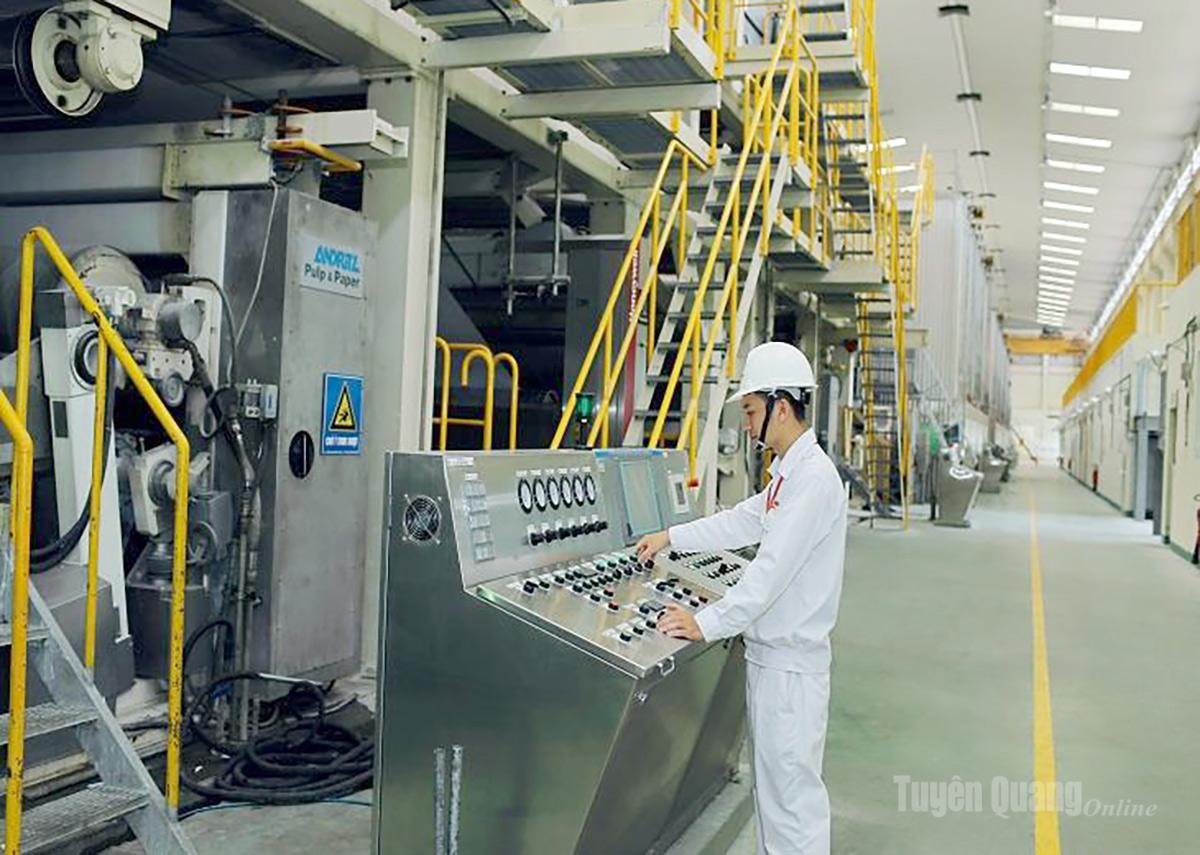
Modern technologies at An Hoa Paper Mill have helped optimise production while reducing environmental impacts
Turning PGI commitments into action
The improvements are underpinned by a clear policy direction: industrial development remains a priority, but not at the expense of the environment. That principle is increasingly reflected in the province's policy decisions and investment management.
Nguyen Huu Thap, Chairman of the Tuyen Quang Business Association, described the Provincial Green Index as an important measure of how environmentally responsible an investment and business environment is. As Tuyen Quang accelerates industrialisation, he said, a stronger PGI not only enhances the province's reputation among investors but also serves as a rigorous test of the effectiveness of local governance.
Recognising PGI improvement as a priority, provincial authorities have rolled out a range of coordinated measures. Administrative procedures are being streamlined, while environmental impact assessment (EIA) processes are being accelerated to enable qualified green projects to move into operation more quickly.
Investment screening has also become more stringent. Projects involving outdated technologies, high pollution risks or inefficient use of natural resources are no longer considered, even if they promise short-term budget revenues. Since the beginning of the year, the provincial People's Committee has reviewed ongoing investments and halted five projects found to be inconsistent with the province's development orientation and environmental standards.
At the same time, support policies have been expanded to help businesses adopt cleaner production methods and low-emission technologies, enabling investors to better meet ESG requirements and internationally recognised carbon certification standards.
Improving the Provincial Green Index is viewed not as a short-term campaign but as a long-term development strategy. By maintaining its commitment to green growth, Tuyen Quang aims to protect its natural environment while strengthening its appeal as a safe, sustainable and competitive destination for high-quality investment.
Nguyen Thanh Hieu
Vietnamese source: Tuyen Quang online