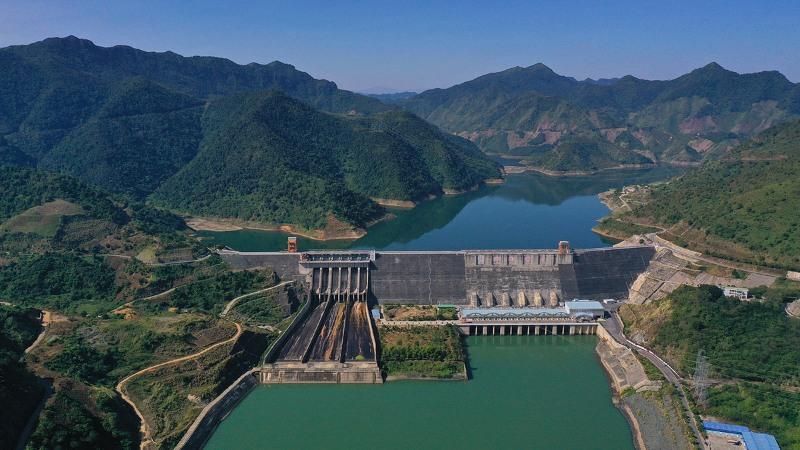
Tuyen Quang Hydropower Plant (a photo on seho.vn)
In line with the Politburo’s Resolution No. 70 on national energy security through 2030, with a vision to 2045, provincial authorities have placed energy development at the center of Tuyen Quang’s long-term strategy, emphasizing the importance of a stable and sufficient power supply to support economic growth and industrial expansion.
Meeting rising electricity demand
According to Tuyen Quang Electricity Company, it currently serves nearly 500,000 electricity users, with total annual power demand reaching billions of kilowatt-hours. As industrial activity continues to expand, electricity consumption across the province has been increasing by an average of 9 to 10 percent per year, creating growing pressure on energy supply capacity.
With its mountainous terrain and dense river system, including major waterways such as the Gam River and the Lo River, Tuyen Quang has significant potential for hydropower development. These natural conditions have enabled the province to develop a network of small and medium-sized hydropower plants, contributing to a stable and reliable electricity supply.
At present, provincial authorities report that 52 hydropower plants are in operation across Tuyen Quang, with a combined installed capacity exceeding 1,292 megawatts. In addition, 31 hydropower projects, with a total capacity of nearly 360 megawatts, have been approved and are under construction, while nine other projects remain in the planning pipeline, representing a further potential capacity of more than 256 megawatts.
The Tuyen Quang Hydropower Plant is the largest facility in the province, with an installed capacity of 342 megawatts. Each year, the plant supplies more than 1.6 billion kilowatt-hours of electricity to the national grid, contributing to local energy security and supporting the stability of power supply in northern Vietnam.
According to the provincial Department of Industry and Trade, power plants in Tuyen Quang collectively contribute more than 5 billion kilowatt-hours of electricity annually to the national grid. This output meets local demand for production, business operations, and daily life, while also supporting national power supply, creating stable employment, and contributing to socio-economic development.
Expanding clean and renewable energy
In accordance with Resolution No. 70, Power Development Plan VIII, and Vietnam’s commitment at COP26 to achieve net-zero emissions by 2050, Tuyen Quang has prioritized the efficient exploitation of its energy potential, with a focus on clean and renewable energy sources.
Provincial authorities are promoting energy efficiency, developing modern and integrated energy infrastructure, and encouraging investment in rooftop solar power, biomass energy derived from agricultural and forestry by-products, and other renewable energy solutions.
Currently, local authorities confirm that two biomass power plants are operating in the province, with a combined capacity of 47.5 megawatts, although they are not connected to the national grid. One additional biomass power project, with a capacity of 50 megawatts, has received investment approval and is in the preparatory phase.
At the same time, provincial data show that 221 organizations and individuals have installed rooftop solar systems and are selling electricity to the grid, with a total installed capacity of 6,848 kilowatt-peak.
Under the revised Power Development Plan VIII, which has been integrated into Tuyen Quang’s provincial development plan for 2021–2030 with a vision to 2050, the province is expected to add approximately 150 megawatts of biomass power capacity during the 2025–2035 period, along with more than 650 megawatts of solar power projects.
Energy security as a foundation for growth
Energy security plays a central role in Tuyen Quang’s development agenda for the coming years. The First Provincial Party Congress for the 2025–2030 term has set 18 key development targets, including an average gross regional domestic product growth rate of 10.5 percent per year during the 2026–2030 period.
By 2030, provincial targets indicate that per capita GRDP is expected to reach VND 95 million (about $3,600), state budget revenue VND 12 trillion (about $456 million), and labor productivity more than VND 213 million per worker (about $8,100).
Leaders of Department of Industry and Trade have stated that achieving these targets will depend heavily on a stable, secure, and sustainable energy supply. By strengthening energy infrastructure, diversifying power sources, and expanding clean and renewable energy, Tuyen Quang is laying the groundwork for long-term socio-economic development during the next phase of growth.
Nguyen Thanh Hieu
From a Vietnamese news on Tuyen Quang online