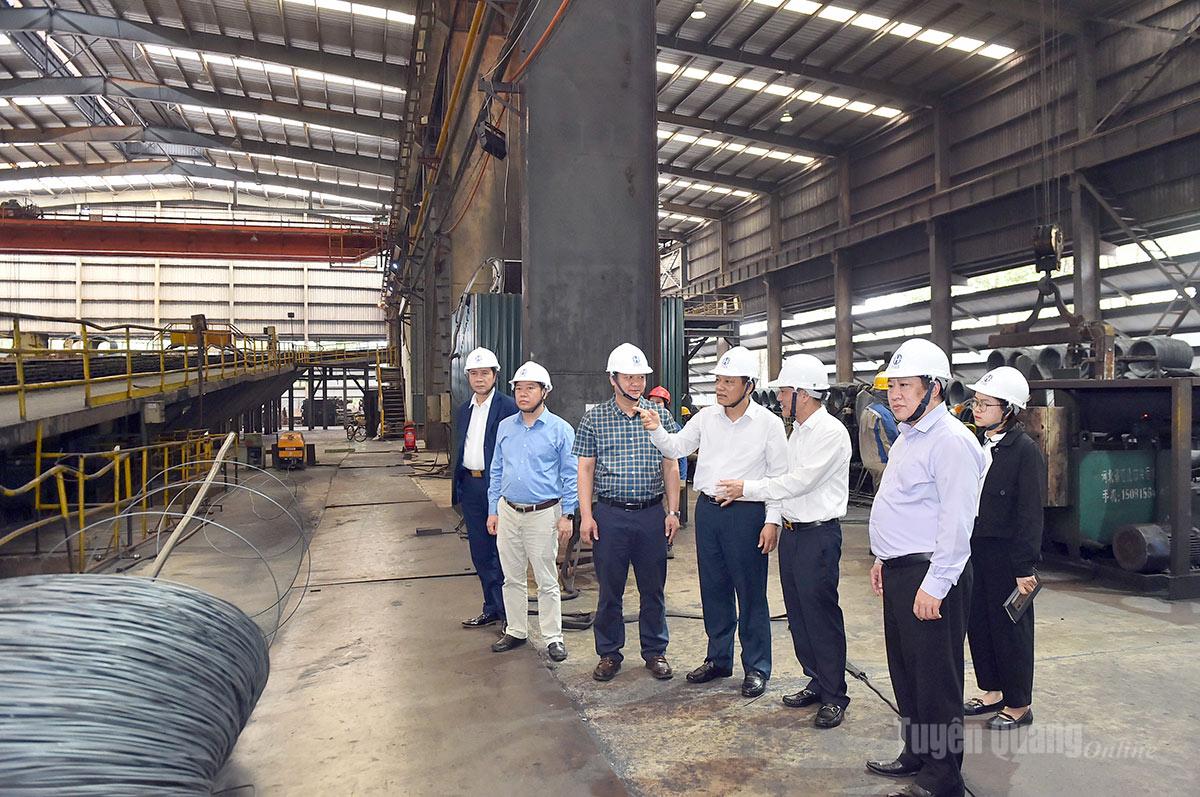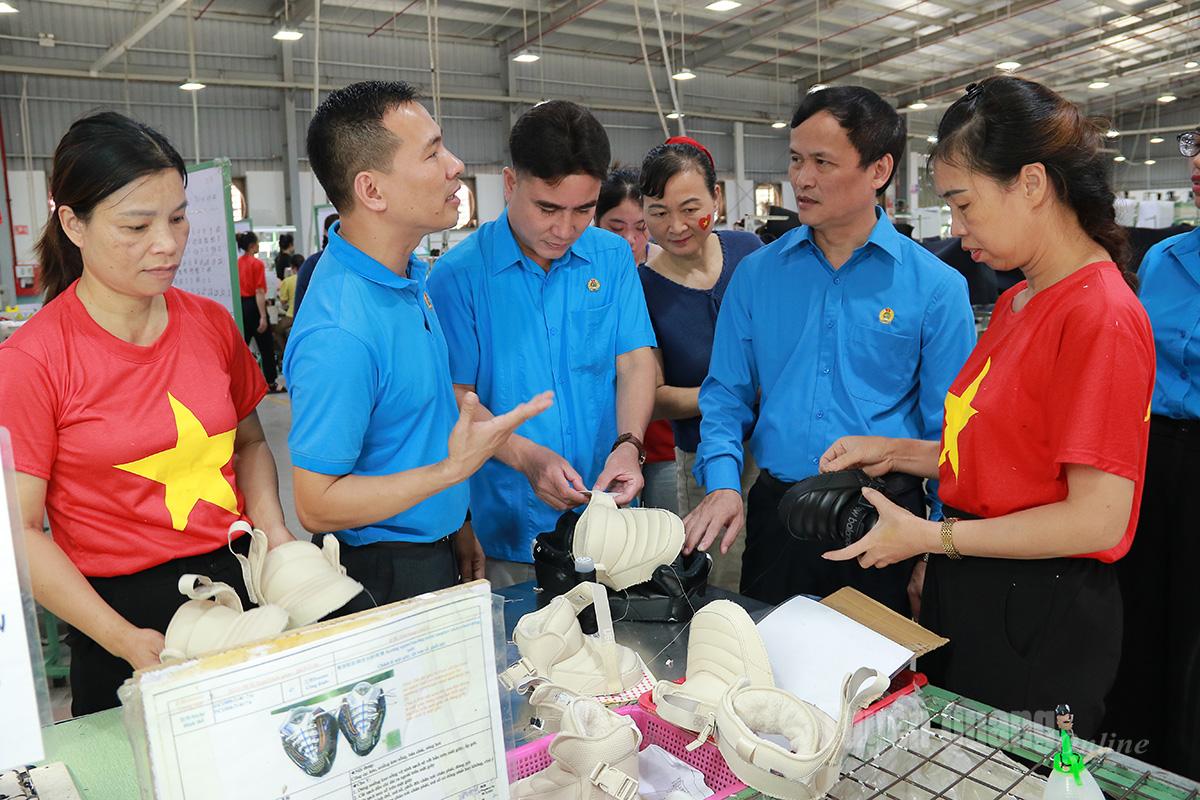
A provincial delegation inspects labor and employment policy implementation at Chung Jye Tuyên Quang Shoe Manufacturing Co., Ltd
A standout highlight in the provincial operationalization of Resolution 66 is the paradigm shift towards pragmatic institutional building and execution, adopting a framework where citizens and enterprises are placed at the heart of service. Across the board, sectors have focused on purging obsolete and overlapping regulations that stifle production, business, and daily life. In 2025, over 1,137 legal documents were reviewed; 121 were declared entirely invalid, 25 partially invalid, and 451 were flagged for amendment due to inconsistencies. Such rigorous oversight ensures that post-issuance legal frameworks remain constitutional, lawful, and feasible. Parallel to this, the province has accelerated decentralization, coupled with strict supervision and clear individual accountability, particularly for heads of agencies. A total of 1,621 administrative procedures have been streamlined, significantly boosting administrative reform scores and satisfaction levels.
Throughout this process, robust feedback loops from grassroots levels, enterprises, and the public are prioritized. Emerging bottlenecks are promptly logged, reported, and addressed with decisive solutions. Such a mechanism ensures that newly issued policies remain firmly anchored in reality, effectively eliminating the paradox of being "procedurally correct" yet practically unfeasible.
Through the decisive and synchro implementation of Resolution 66, the provincial investment and business climate has become increasingly transparent and accessible. Numerous investment projects have seen their bottlenecks in land procedures, site clearance, and resource access unclogged. This accelerated progress has fueled economic growth, sparked job creation, and bolstered local incomes.

A standout highlight in the provincial operationalization of Resolution 66 is the paradigm shift towards pragmatic institutional building and execution, adopting a framework where citizens and enterprises are placed at the heart of service
In agriculture, value-chain support mechanisms and production policies are refined for maximum flexibility and practical fit. High-tech, organic, and commodity-based farming models are being scaled up and replicated. The New Rural Development program remains effective, driven by active civic participation. In the social sector, institutional innovation has bolstered public service quality, notably in education, healthcare, and social welfare.
National target programs and support policies for ethnic minorities and disadvantaged areas are delivered promptly and precisely, effectively narrowing the development gap across regions and demographics. Meanwhile, regulations on land, minerals, and forest resources are tightened yet calibrated to ensure a synergy of interests between the State, enterprises, and the public.
Tuyên Quang’s experience demonstrates that when institutions are built and executed with a pragmatic alignment, resources are unclogged, creating new momentum for development. Resolution 66 has thus evolved from a mere strategic orientation into a governance compass for local administration.
Through this proactive and creative approach - where practicality is the ultimate benchmark - the implementation of Resolution 66 is opening new horizons, establishing a solid foundation for Tuyên Quang to achieve rapid, sustainable growth in the nation’s new developmental era.
Nguyen Thanh Hieu
Vietnamese source: Tuyen Quang online