Upon reaching Co Yeng Pass, any traveler would be awestruck by the sheer majesty of Pac Ta Mountain. It rises resolutely through the drifting clouds, its imposing silhouette mirrored in the serene waters of the hydroelectric reservoir. Locals rightfully consider Pac Ta the ultimate symbol of Na Hang.
According to the elders, this towering peak is also known as "Elephant Mountain" due to its resemblance to a giant elephant bowing beside a wine-filled gourd. Legend has it that during an ancient foreign invasion, the villagers mobilized their forces, including an exceptionally fierce lead bull elephant that no one could tame. However, a mahout from afar arrived and undertook the task.
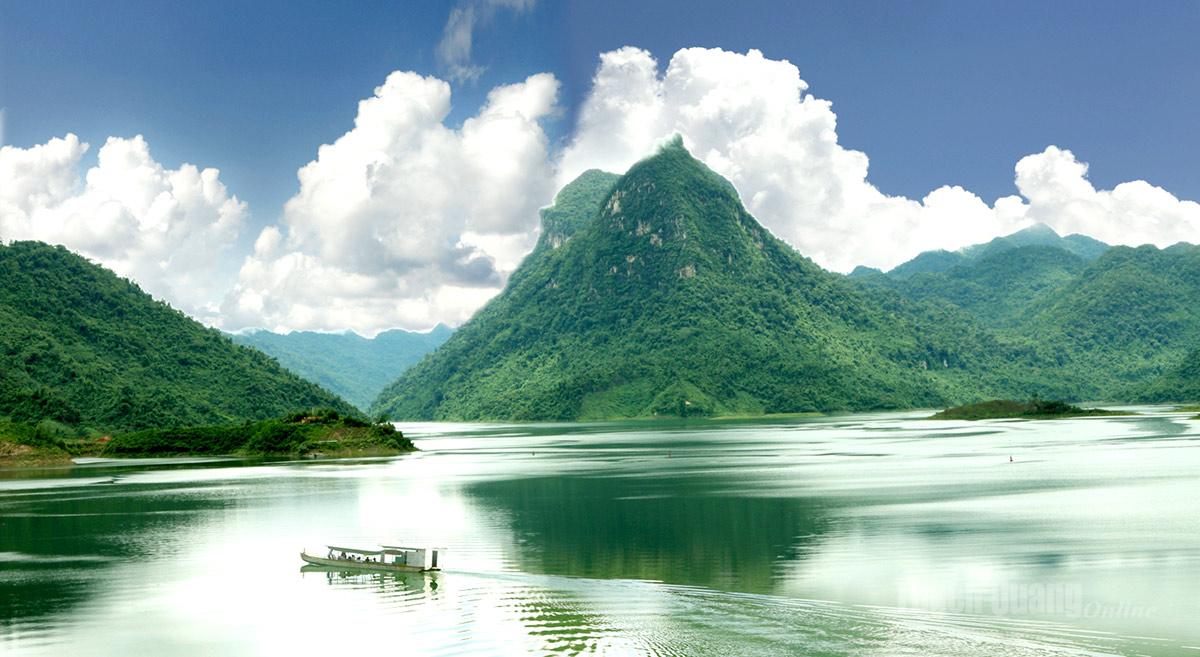
Pac Ta Mountain, Na Hang Commune
He began by blocking all water sources around the elephant's habitat. After three days, when the elephant was parched, he poured wine into a rock hollow for it to drink. Over time, the elephant grew accustomed to the wine and the mahout. On the day of the battle, the "wine-elephant" led the charge with ferocious courage, devastating the enemy ranks. Following the victory, the King conferred the title of "Elephant Duke" upon it. That night, the elephant passed away, and by dawn, both the elephant and the gourd had transformed into stone, becoming the majestic Pac Ta Mountain that stands tall against the blue sky today.
Mr. Hoang Minh Dang, former Head of the Na Hang District Culture and Information Office, shared: “Seeing Pac Ta from afar means seeing home.” Interestingly, the mountain changes its appearance from every angle - sometimes a meditative elephant, sometimes a colossal wine-filled gourd, appearing and disappearing within the mist above Tuyen Quang Lake. This landscape is tied to the legend of the "99 mountains where the Phoenixes came to nest."
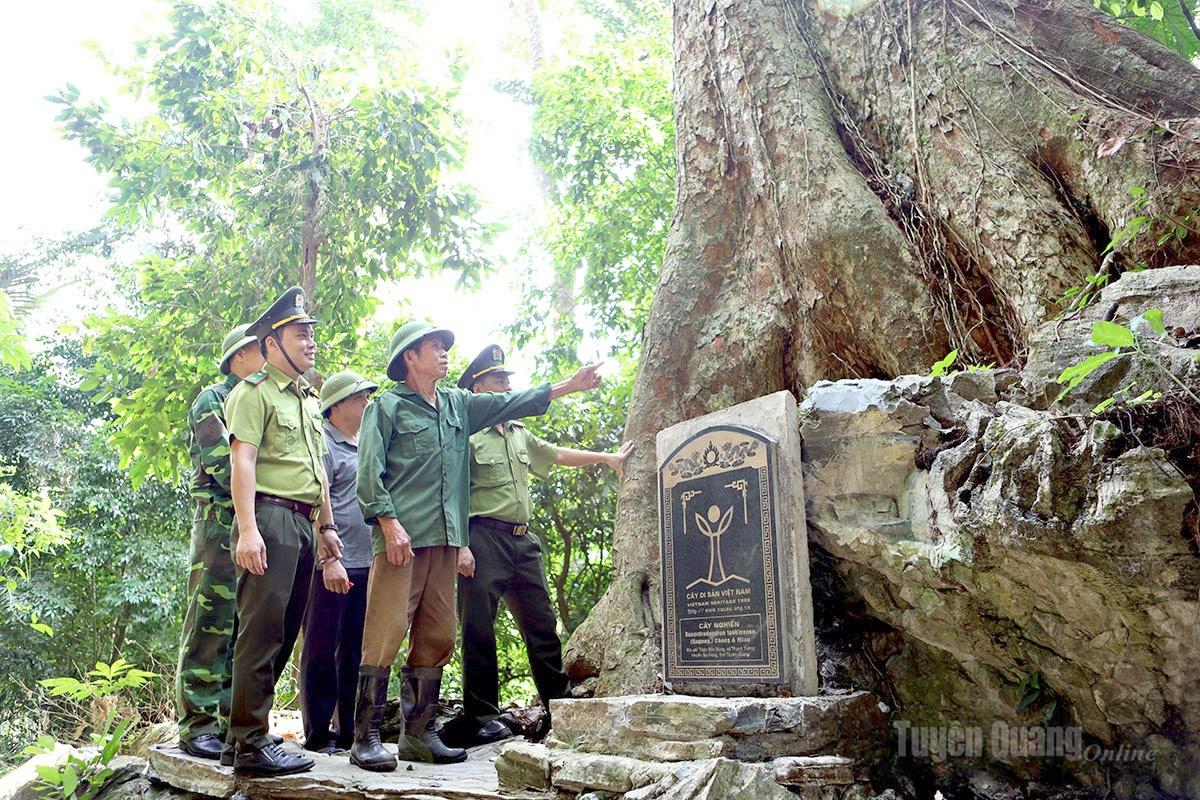
The Heritage Ironwood tree (Burretiodendron tree) in Ban Bung Village, Na Hang Commune, preserved across generations
At the foot of Pac Ta lie the ruins of an ancient temple, situated where the two rivers meet. It honors the local fiancée of General Tran Nhat Duat, who was defending Tuyen Quang against the second Mongol invasion. After several restorations, Pac Ta Temple was rebuilt in 2008 and designated a National Relic in 2009. The General’s fiancée is revered by the locals as the Holy Mother beneath the legendary slopes of Mount Ta.
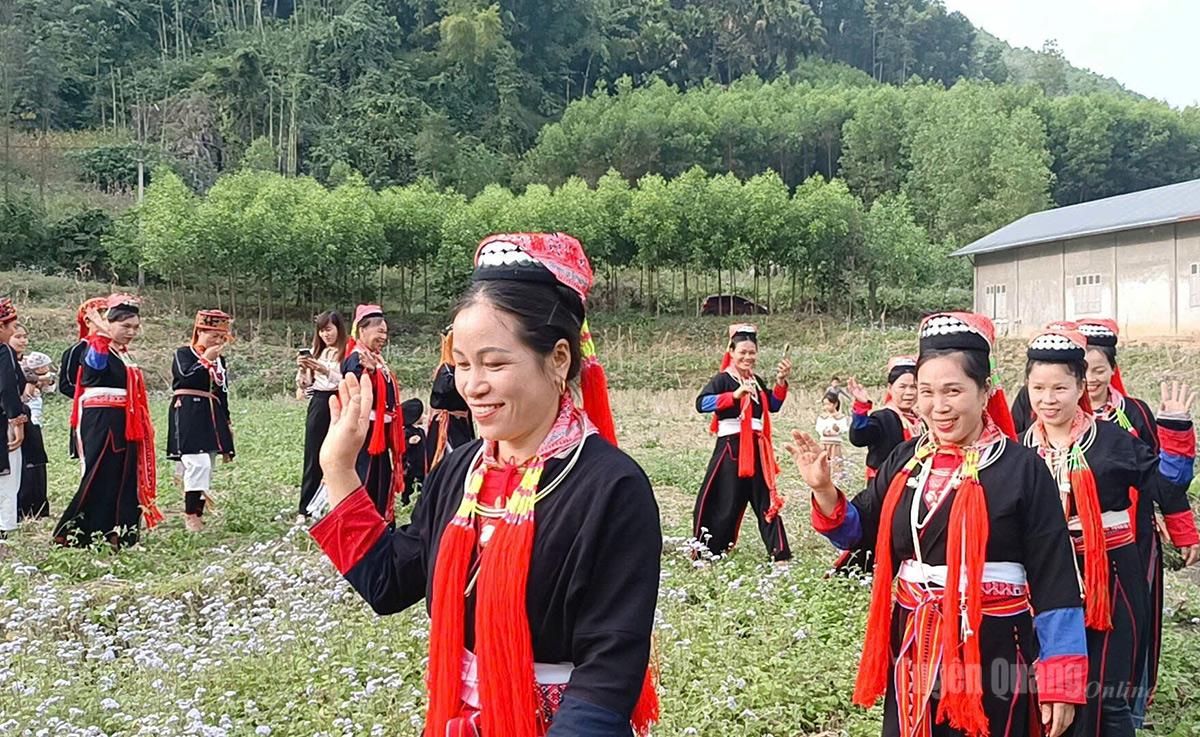
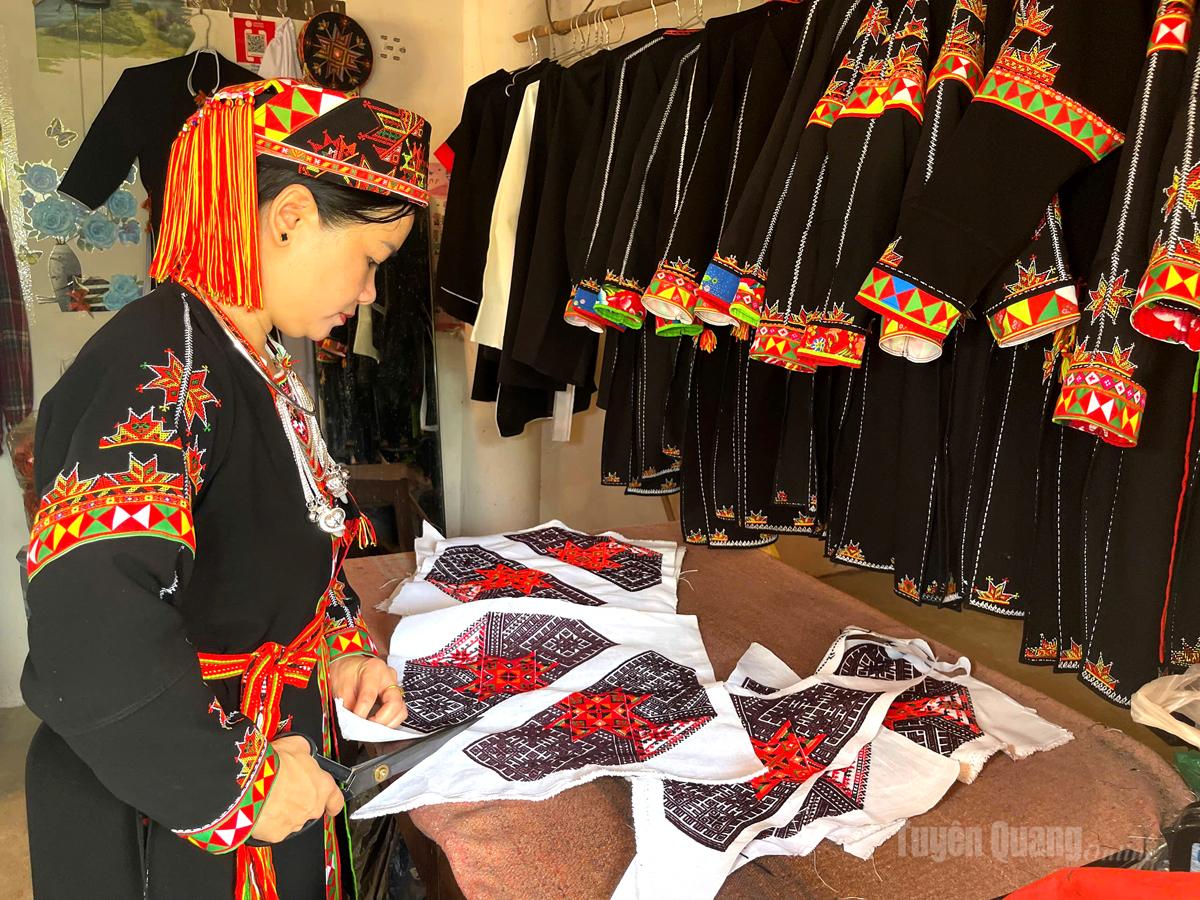
Visiting Na Hang offers a chance to immerse oneself in poetic landscapes. Amidst the drifting highland mists, simple stilt houses with grey-brown roofs nestle against the slopes. Here, one can witness the deft hands of Tay and Dao women at their looms, weaving vibrantly patterned brocades.
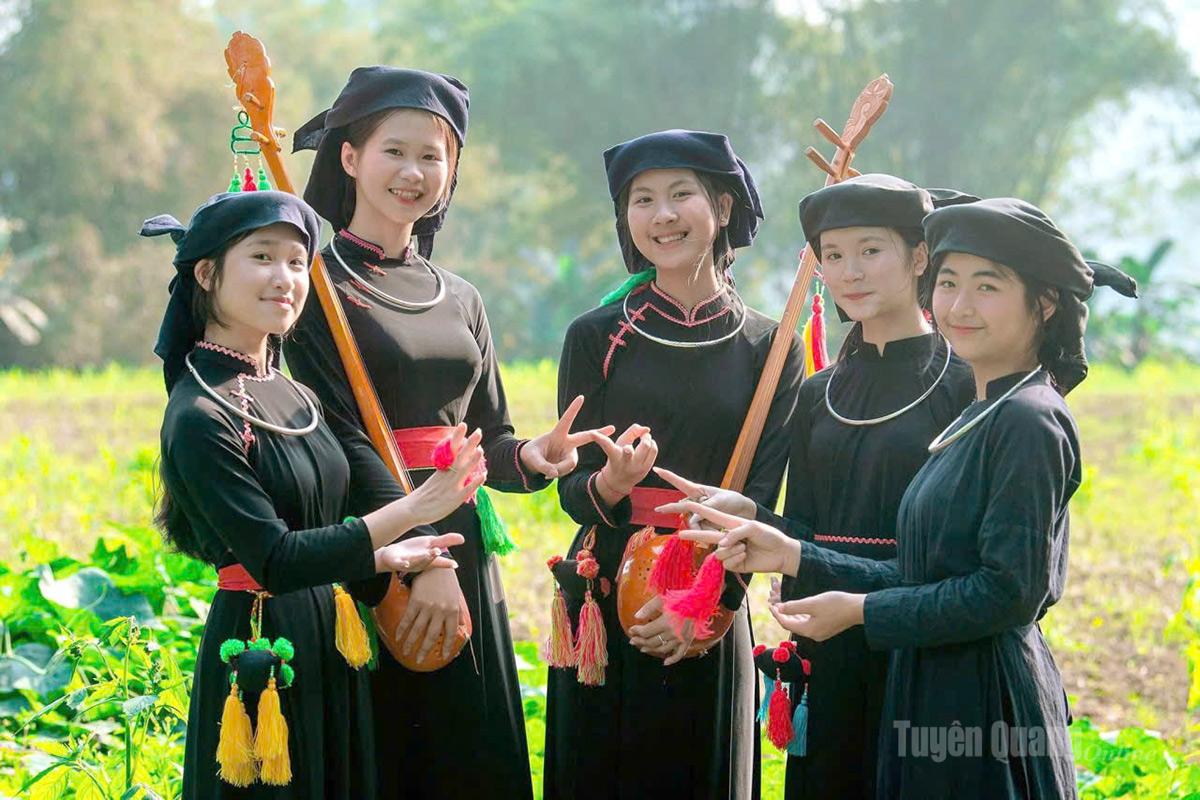
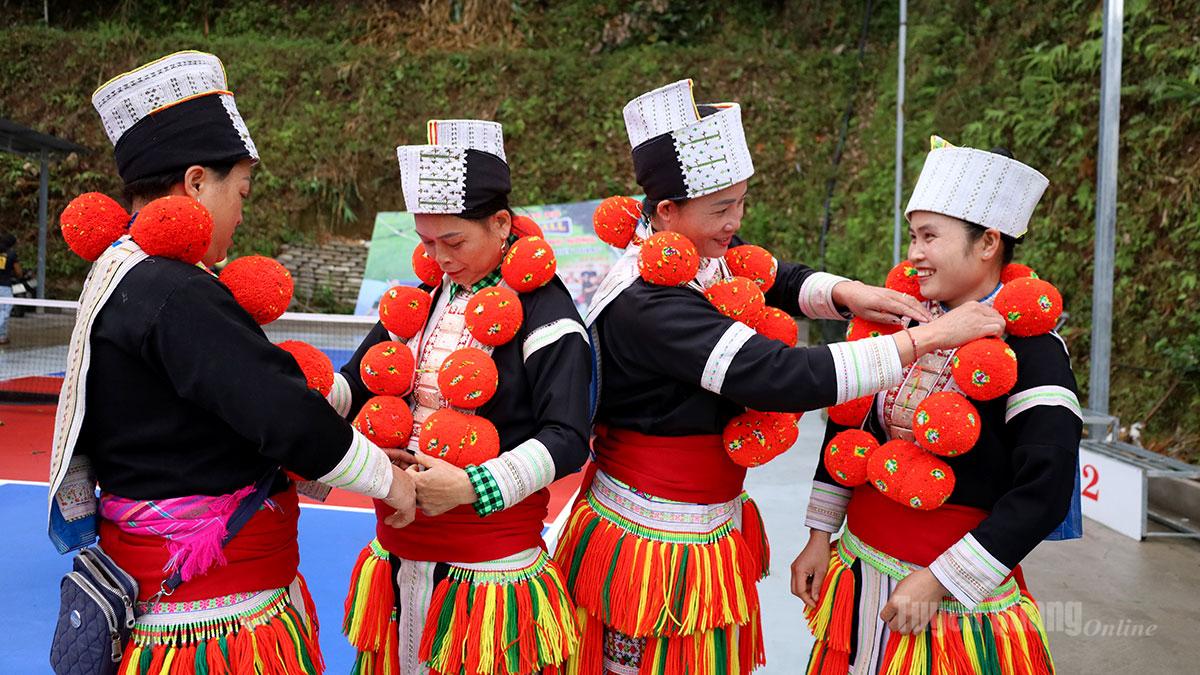
Yet the allure of this land extends further. Visitors are captivated by the unique cultures of various ethnic groups - the soul-stirring melodies of Then, Luon, and Coi singing accompanied by the Tinh lute; the Long Tong festival of the Tay; and the sacred "Cap Sac" rituals of the Dao. All harmonize to create a vibrant multi-ethnic cultural landscape.
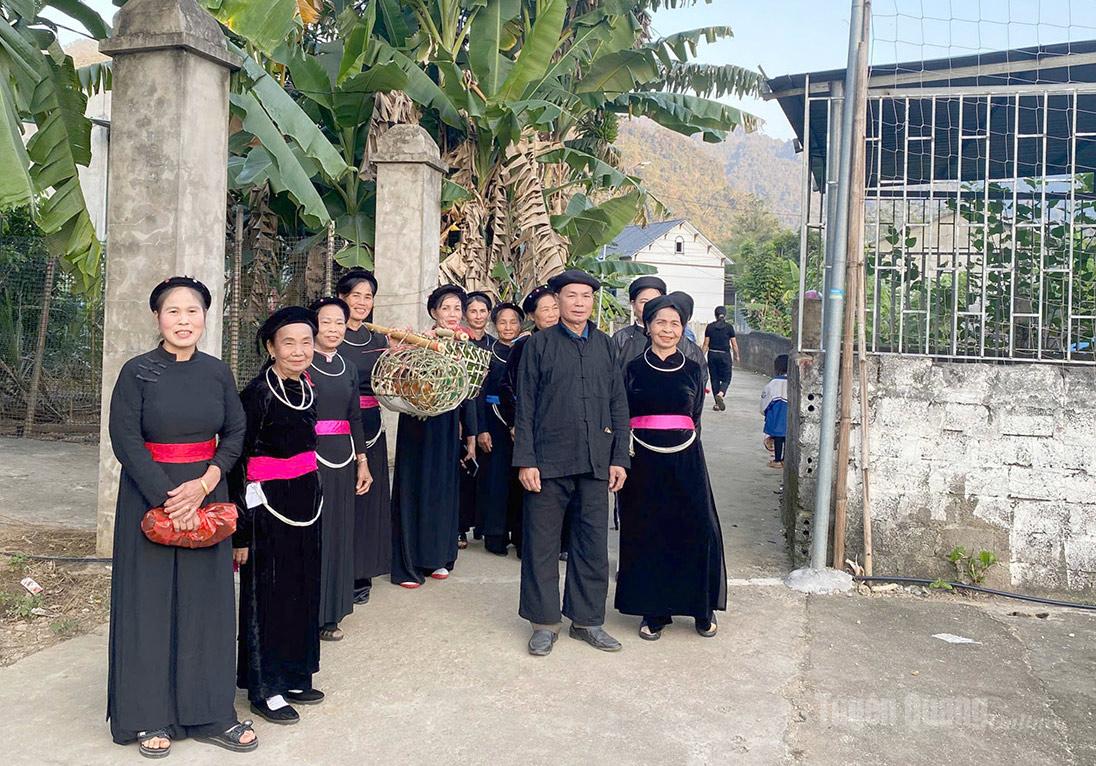
Reenactment of a traditional Tay wedding in Na Lang Village, Na Hang Commune
Since the completion of the Tuyen Quang Hydroelectric Project in 2007, the Na Hang - Lam Binh ecological lake has expanded to 8,000 hectares, offering a breathtaking "mountain-meets-water" landscape. The surrounding primary forests are home to thousand-year-old ironwood trees (Burretiodendron tree) and the Tonkin snub-nosed monkey, a species listed in the global Red Data Book.
Mr. Nguyen Tien Sy, Vice Chairman of the Na Hang Commune People's Committee, noted that tourists are often stunned by the raw, pristine beauty of the primary forests and the cascading white waterfalls. The cool, refreshing climate and the humble, warm-hearted nature of the locals leave a lasting impression.
In the coming time, Na Hang Commune will conduct a comprehensive assessment of key tourist sites in Ban Bung Village - the "heart" of the commune's ecotourism. Highlights include Bo Kim Cave, the Vietnam Heritage Ironwood tree, and exploration routes through the Tat Ke - Ban Bung Nature Reserve, along with the Red Stone Stream and ancient tea forests. These landmarks not only possess a wild, mystical allure but also hold immense potential for developing experiential, ecological, and community-based tourism.
Nguyen Thanh Hieu
Vietnamese source: Tuyen Quang online