Breakthrough from innovative thinking
During the 2020 - 2025 term, the Provincial Party Committee identified agricultural and forestry production as one of three key breakthroughs, focusing on flagship and specialty products with high quality and added value, tied to the new rural development program. The province emphasized restructuring agriculture toward sustainability, strengthening value chain linkages, encouraging land consolidation for high-tech farming, and gradually building organic farming zones.
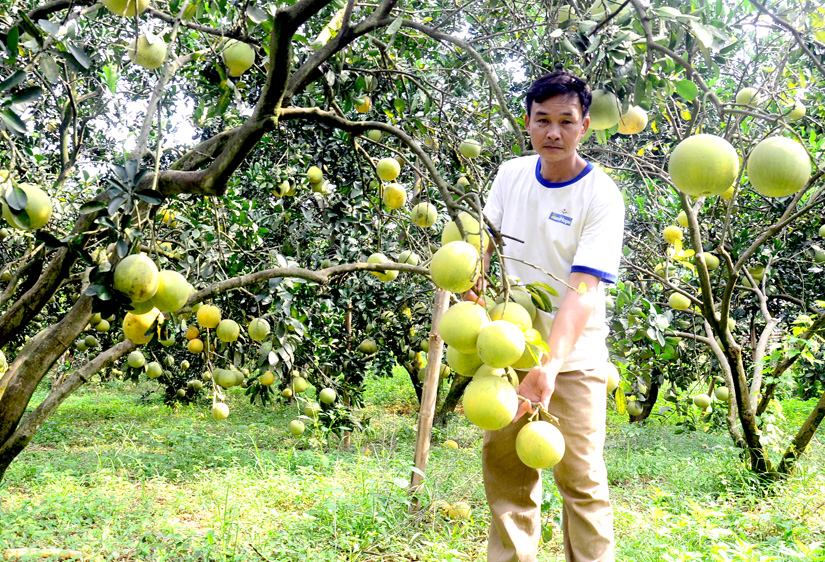
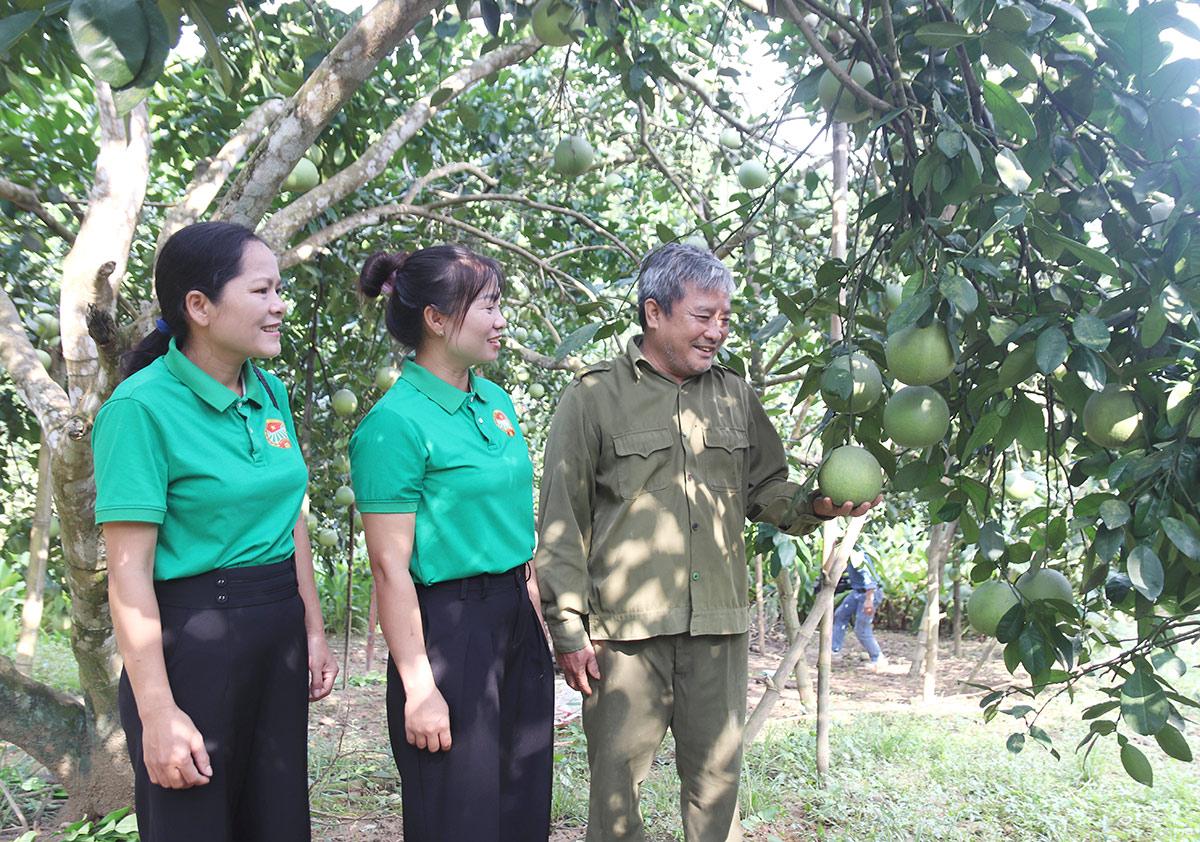
From these resolutions, many signature products have been upgraded, most notably Sanh orange. More than 400 organizations and individuals received preferential loans to improve nearly 700 hectares of orchards, boosting productivity, improving quality, and increasing profits. Alongside orange, specialty rice, Shan tuyet tea, Soi Ha pomelo, temperate fruits, cardamom, and buckwheat are also gaining favorable conditions to become branded, high-value commodities.
Phin Ho Tea Processing Cooperative, Thong Nguyen Commune, is the owner of two 5-star OCOP products.
In particular, Tuyen Quang owns over 18,000 hectares of ancient Shan tuyet tea trees – the “green gold” of the mountains. Nearly 14,000 hectares are harvested each year, producing about 68,000 tons with a value of over VND 700 billion, serving as a key economic driver. The province’s 7,000-hectare specialty rice area not only ensures food supply but also supports eco-tourism development, creating dual values in economy and culture.
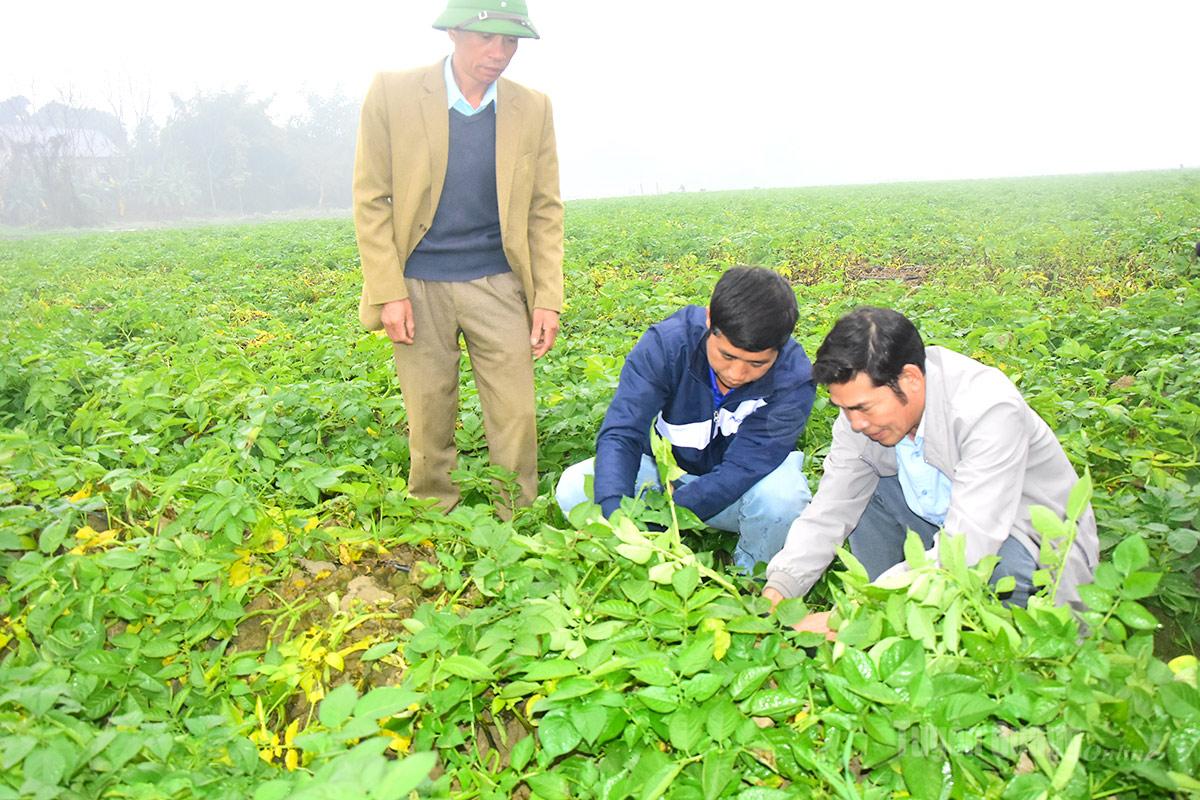
Thanks to these policies, crop farming has maintained annual growth of 4-5%. The province now has 220,000 hectares of annual crops, more than 25,000 hectares of fruit trees, 28,000 hectares of tea, and 24,600 hectares of medicinal plants. Average crop production value reaches VND 83.5 million per hectare, with total food output over 780,000 tons, ensuring food security while enhancing value-added agriculture.
“Passports” for agricultural products
Tuyen Quang is promoting high-tech applications, with nine greenhouses cultivating melons, hydroponic vegetables, and other high-value crops. These models help control microclimates, stabilize productivity, and meet food safety and traceability standards. At Kim Binh Agricultural Cooperative, greenhouse-grown melons with drip irrigation and climate control yield two to three times higher than traditional methods, generating hundreds of millions of dong per crop.
The application of science and technology has expanded from 40% of agricultural production in 2016 to over 80% today. About 5,700 hectares of crops are certified under safe and sustainable standards: 3,200 hectares VietGAP, 1,561 hectares organic, nearly 915 hectares Rainforest Alliance, and 8 hectares GlobalGAP. The province also has 50 safe food supply chains, seven processing facilities with international certifications such as ISO, HACCP, and Halal, and 10 products with geographical indications.
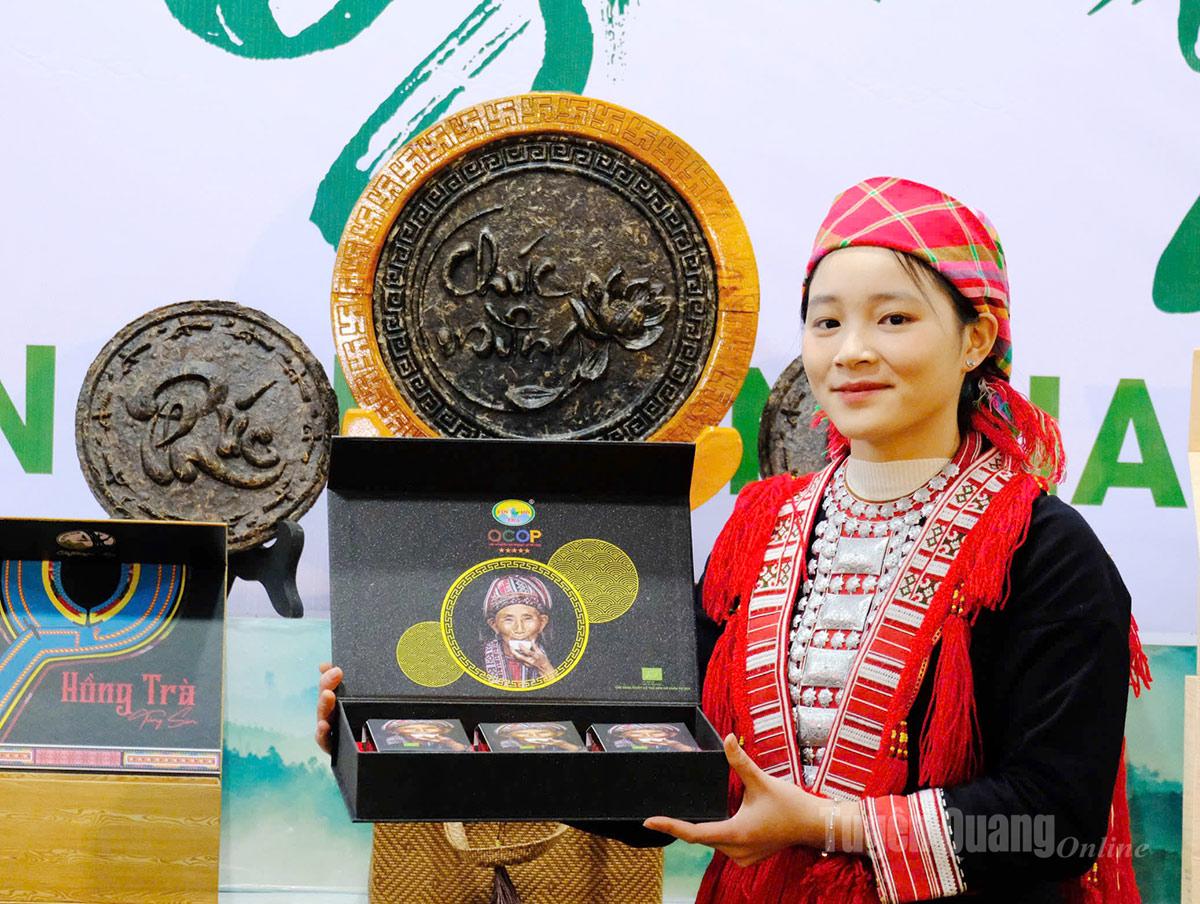
An ethnic woman showcases a product made by Phin Ho Tea Cooperative, an OCOP 5-star brand
Currently, Tuyen Quang has 457 OCOP-certified products, including two 5-star and one potential 5-star products, along with hundreds rated 3-4 stars. Several have successfully reached international markets: tea exported to Russia, the US, Pakistan, and Europe; ginger and radish to Japan; and Soi Ha pomelo to the UK. These milestones mark important steps in integrating Tuyen Quang’s agricultural products into the global market.
Removing bottlenecks, creating new momentum
Despite progress, agriculture in Tuyen Quang still faces challenges: dependence on weather, unstable yields, underutilized land and crop advantages, and aging orchards. Processing capacity remains limited, with many products sold raw at low added value. Certified safe production areas cover just over 5,700 hectares, and GlobalGAP-certified areas remain minimal. Fragmented production and weak farmer–cooperative–enterprise linkages leave value chains fragile and market risks high.
To address these issues, the province is restructuring production zones according to natural advantages and market demand, while developing digital maps of soil, climate, and crop diseases. It aims to build five to seven modern production centers by 2030. Digital transformation will also be expanded, with electronic farm logs, cooperative management software, and e-commerce platforms connecting supply and demand.
The strategy focuses on organizing production around sustainable value chains, strengthening linkages between government, scientists, enterprises, and farmers. On this basis, Tuyen Quang will expand contract-based production, product traceability, and branded planting zones, while prioritizing VietGAP, GlobalGAP, and organic standards.
Toward modern, sustainable agriculture
With its strategic vision, Tuyen Quang is building an agriculture that ensures food security, enhances value, and integrates internationally. By restructuring production, developing large-scale commodity zones, applying high technology, driving digital transformation, and reinforcing value chain linkages, the province is unlocking the “golden key” to position its agricultural brand on the global stage.
Nguyen Thanh Hieu
Vietnamese source: Tuyenquangonline