Lung Phin Commune is currently home to nearly 30 hectares of Shan Tuyet tea, including around 2 hectares of ancient tea trees with an average age of about 300 years. The ancient trees not only create a distinctive landscape amid the rocky terrain but also preserve a valuable gene pool and produce tea with a unique flavour that is difficult to replicate elsewhere - notably its distinctive aroma, mild taste without excessive bitterness, and lingering sweetness.
Made from freshly picked buds and traditionally processed by hand, Lung Phin tea is gaining increasing recognition among consumers. Its value lies not only in its quality but also in its potential to generate higher incomes for local people. For households with ancient tea trees, tea has become one of the most economically rewarding crops, helping change farming practices and approaches in this mountainous area.
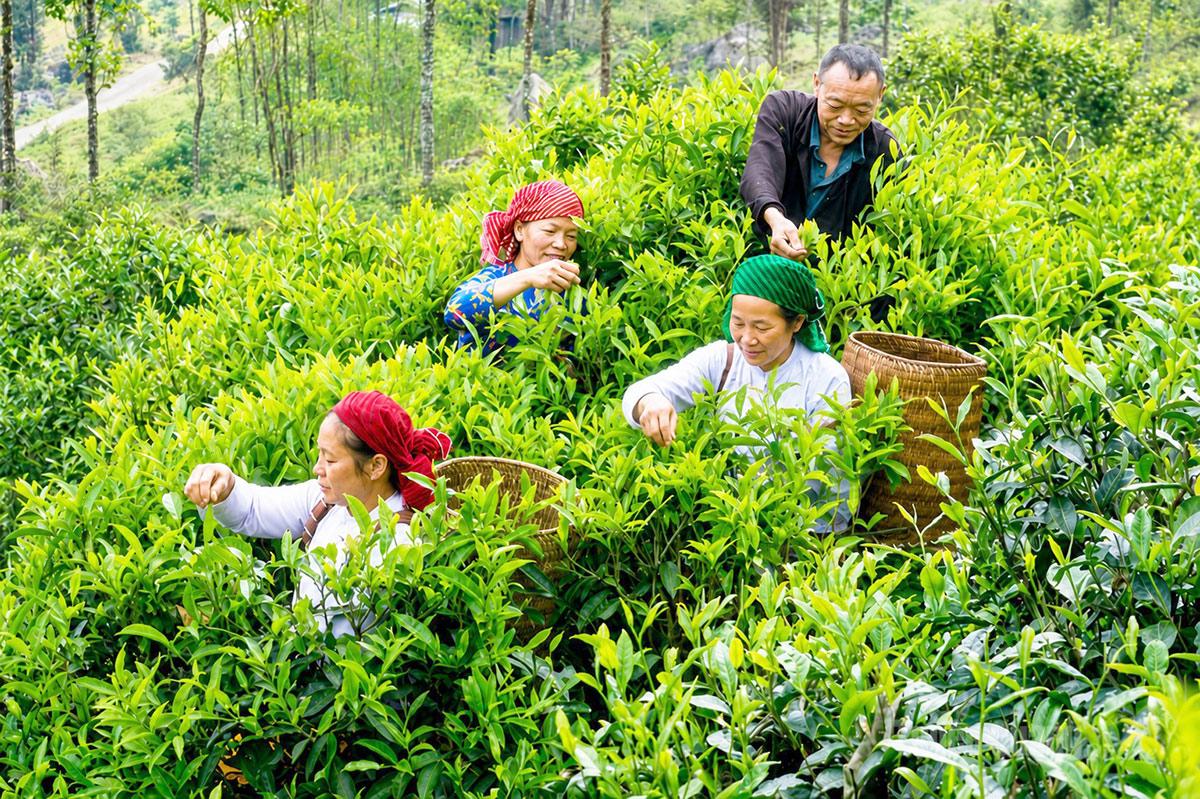
Local people in Lung Phin Commune harvest Shan Tuyet tea
The family of Giang Mi Linh, a H’Mong ethnic minority resident of Can Pay Ho Village, currently has more than 100 ancient Shan Tuyet tea trees. From April to September each year, the family harvests around four crops. They produce about 100 kg of dried tea annually, with an average selling price of VND 1.5-2.5 million per kilogram, generating an income of around VND 200 million. According to Linh, income from tea is many times higher than that from maize. His family’s tea is sought by customers in cities and provinces including Ho Chi Minh City, Ha Noi, Thai Nguyen and Hai Phong; at times, customers have to place orders in advance to secure the product.
Beyond their economic value, the ancient tea trees are also closely associated with the memories and lives of local people across generations. Giang Va Po, a resident of Can Pay Ho Village, said he had seen the Shan Tuyet tea trees there since he was born. Now in his 60s, he still sees many of the same trees standing, their size having changed little but continuing to produce new buds every year. To him, the trees have become a familiar part of life and a heritage passed down by his ancestors.
Recognising the value of Shan Tuyet tea, Lung Phin Commune has in recent years focused on preserving its ancient tea trees while gradually expanding the tea-growing area. Over the past decade, the commune has expanded its Shan Tuyet tea plantations by more than 5 hectares. Alongside preserving the ancient trees, the local authorities have provided guidance on developing new plantations, gradually establishing a stable supply area. To improve production efficiency, the commune has organised training and awareness-raising sessions and provided guidance on techniques for planting, caring for, harvesting and processing Shan Tuyet tea. It has also provided seedlings and fertiliser to tea-growing households. These efforts have helped local people gradually change their farming practices, improve product quality and increase the economic value of tea.
Nguyen Van Chinh, Chairman of the Lung Phin Commune People’s Committee, said the commune is currently focusing on developing Shan Tuyet tea to make the most of its local advantages and strengths. Alongside preserving the indigenous tea variety, the locality aims to develop tea products in connection with tourism and build a distinctive brand for Lung Phin tea, thereby creating more jobs, raising incomes and contributing to sustainable poverty reduction.
Having withstood hundreds of seasons of rain and sunshine, the ancient tea trees are giving the people of Lung Phin renewed confidence in a new path forward. Preserving the ancient tea trees, therefore, is not simply about protecting the trees and roots handed down by their ancestors. It is also about safeguarding a distinctive local product, a source of livelihood and the cultural values of this land.
Nguyen Thanh Hieu
From Tuyen Quang online