Fostering an Inter-regional Tourism Ecosystem
Resolution No. 92-NQ/TU, issued by the Provincial Party Standing Committee, outlines a transformative vision to establish tourism as a spearhead economic sector for the 2026-2030 period, looking toward 2050. The core strategy shifts away from isolated growth toward a integrated approach - utilizing spatial linkages, resource connectivity, and cultural preservation as the bedrock for high value-added, competitive, and sustainable tourism. This framework is designed to generate green, inclusive growth that directly fuels local socio-economic development.
Under the province's newly Adjusted Master Plan for the 2021-2030 period, with a vision to 2050, Tuyen Quang’s economic landscape is structured around a comprehensive regional framework: one dynamic axis, two growth poles, three economic regions, four development corridors, and five growth pillars. Critically, the three designated economic zones double as key tourism hubs. These interconnected regions complement each other, maintaining a strict balance between ecological conservation and commercial exploitation.
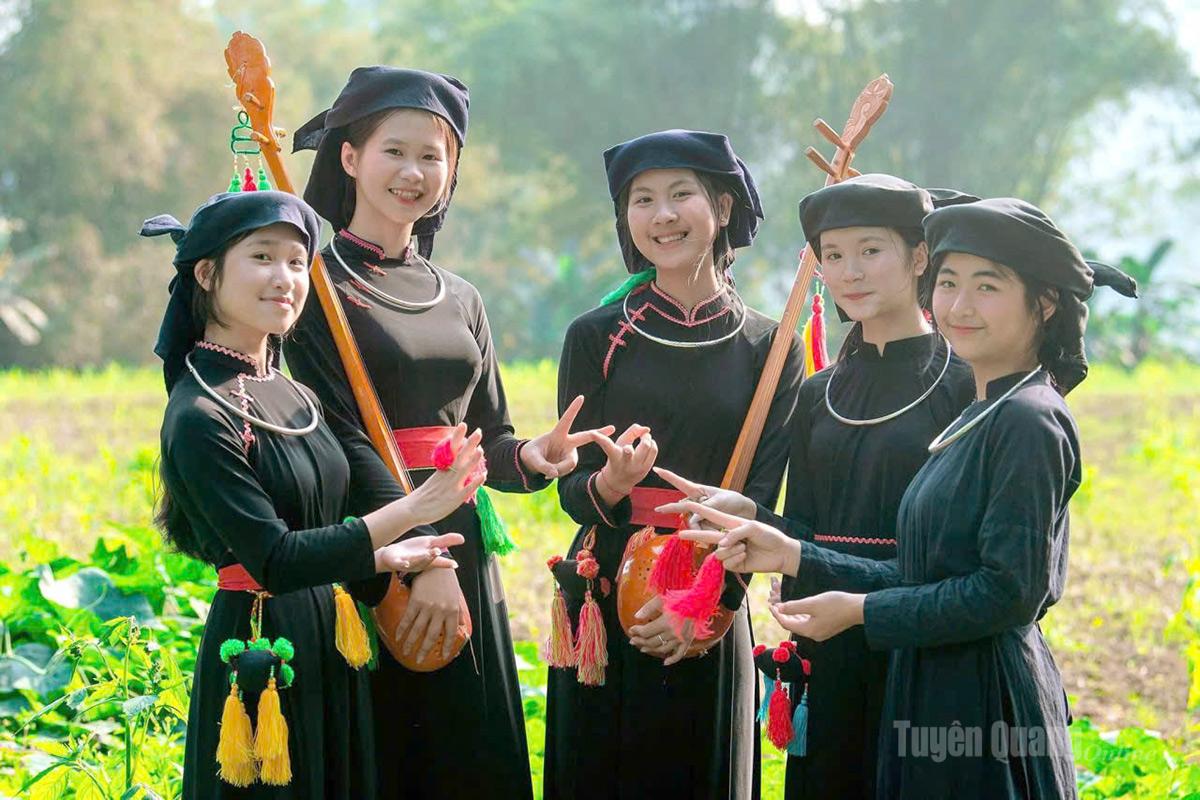
Tay ethnic cultural traditions remain vibrant in the historic valley of Thuong Lam
To complement internal development, the province is actively integrating into broader regional travel circuits. These include the prominent "Through the Heritage Lands of Viet Bac" route - connecting Tuyen Quang with Thai Nguyen, Lang Son, and Cao Bang - alongside the Na Hang - Ba Be and Ha Giang - Hoang Su Phi - Xin Man - Bac Ha routes. Additionally, the Tuyen Quang - Hanoi - Lao Cai corridor links the province directly to major northern economic and transit lines.
On an international scale, Tuyen Quang is expanding its footprint by linking with China’s Yunnan Province and the Guangxi Zhuang Autonomous Region. Facilitated by the Thanh Thuy, Xin Man - Do Long, Sam Pun - Dien Bong, and Lung Lan border gates, these cross-border channels unlock significant potential for international cultural and border tourism, capturing vital global traveler flows.
Catalyzing a New Growth Engine
To operationalize Resolution No. 92-NQ/TU, the Provincial People’s Committee promptly rolled out a comprehensive Tourism Development Scheme running through 2030, with a long-term outlook to 2050.
This initiative introduces a coordinated suite of programs focusing on infrastructure investment, human capital development, cultural heritage preservation, and targeted support mechanisms for local businesses and communities. This institutional push serves as a crucial catalyst, elevating tourism into a primary economic driver for the province in the coming years.
The strategic targets set by the scheme include: By 2030: Tourism will account for over 10% of the provincial GRDP. By 2035: Total arrivals are projected to hit 8 million, fueled by an average growth rate exceeding 15% year-on-year, driving tourism’s economic share to 18-20% of GRDP. By 2050: Annual arrivals are targeted at 20 million, with total tourism revenue projected to reach 150 trillion VND.
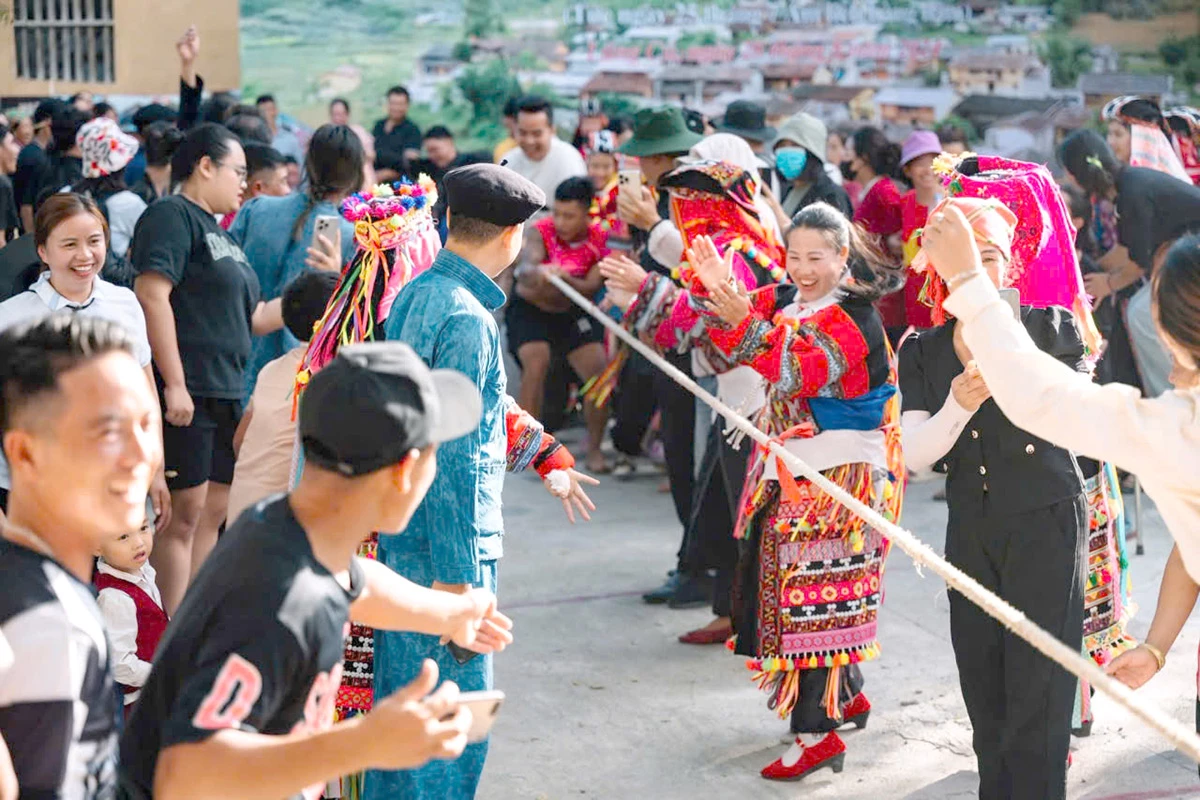
Tourists participating in local cultural activities at Lo Lo Chai Community-Based Tourism Village (Lung Cu, Ha Giang province) - a key destination linked to Tuyen Quang's inter-regional tour circuits
To meet these targets, Tuyen Quang is optimizing its institutional frameworks, refining zoning blueprints, and cultivating a highly favorable investment climate. Tourism master planning is now deeply embedded within broader urban development, socio-economic roadmaps, rural modernization (New Rural Development initiatives), and heritage conservation efforts. The goal is to build highly competitive destination ecosystems and interconnected travel routes.
While Tuyen Quang already draws visitors from nearly 200 countries and territories, marketing efforts are narrowing in on premium, high-spending segments drawn to eco-tourism, cultural heritage, and immersive indigenous travel. Target international markets include the UK, France, Germany, the Netherlands, the US, Canada, Australia, Japan, South Korea, and China. Domestically, outbound marketing centers on Hanoi, the Northern Delta, and southern economic hubs, where consumer demand for green, community-based, and wellness retreats is rising sharply.
By anchoring its strategy on cultural heritage, leveraging its natural landscapes, and maintaining a community-centered approach, Tuyen Quang is solidifying its position as a dynamic tourism anchor in the Northern Midlands and Mountainous region. This localized transformation ultimately enhances Vietnam’s broader profile on the global tourism map through distinct branding, clear competitive advantages, and expanding regional influence.
Nguyen Thanh Hieu
Vietnamese source: Tuyen Quang online