
Tuyen Quang Seeks to Unlock the Potential of Elsholtzia Grass Honey
Among the rocky slopes of the Dong Van Karst Plateau, Elsholtzia grass is more than a distinctive feature of the highland landscape. It is a valuable natural source of nectar for producing the region’s speciality honey and supports the livelihoods of thousands of local households. With more than 3,400 hectares of Elsholtzia grass, over 49,000 beehives and annual honey production exceeding 365 tonnes, Tuyen Quang has considerable potential to develop this distinctive product, improve quality, increase added value and build a stronger local brand.
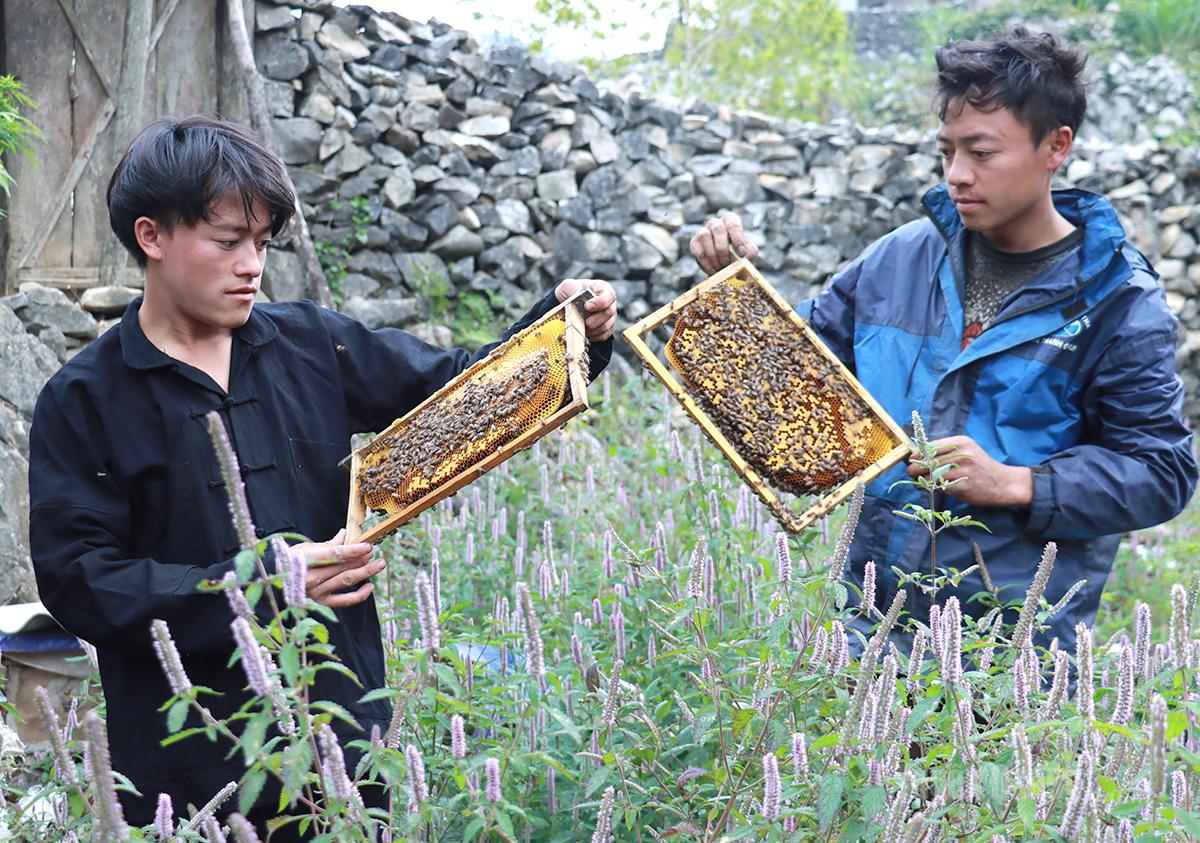
Locals raising honey from Elsholtzia grass flowers
Elsholtzia grass honey is closely associated with the natural environment and livelihoods of communities on the Dong Van Karst Plateau. Nectar from its flowers gives the honey its distinctive character, making it a valuable local speciality. It also provides a foundation for Tuyen Quang to develop high-value agricultural products based on its natural advantages, diversify rural livelihoods and improve incomes in upland communities.
According to figures from the provincial agricultural sector, Elsholtzia grass covers more than 3,400 hectares across the province, concentrated mainly in communes on the Dong Van Karst Plateau. More than 49,000 beehives are currently kept to produce Elsholtzia grass honey, with annual output exceeding 365 tonnes. The scale of the growing areas and the existing beekeeping base give the province a solid foundation for sustaining and expanding production, while developing a value chain that links the flowering plant to market-ready honey products.
Tuyen Quang’s advantage lies not only in the scale of its growing areas, but also in the close links between Elsholtzia grass, beekeeping and the traditional knowledge that local communities have developed over the years. With well-managed harvesting and production, this natural resource could underpin a sustainable speciality honey industry, linking agricultural development with ecosystem conservation and the economic potential of the highlands.
Experience in local communities shows that maintaining Elsholtzia grass growing areas is essential to beekeeping and honey production. A stable supply of flowers enables beekeepers to maintain their colonies, make better use of natural nectar sources and ensure continuity of production. Conversely, any reduction in the area covered by Elsholtzia grass can affect the bees’ food supply, with knock-on effects on honey output and household incomes.
In Meo Vac Commune, Elsholtzia grass currently covers more than 250 hectares. The commune has nearly 1,600 beehives and produces over 6.3 tonnes of honey annually. Four local Elsholtzia grass honey products have received certification under the One Commune One Product (OCOP) programme. This provides a basis for further developing the products, improving quality, strengthening their market reputation and increasing economic returns for producers.
Bui Duy Thuong, Vice Chairman of the Meo Vac Commune People’s Committee, said the local authorities were guiding organisations and individuals in applying technical procedures for planting and tending Elsholtzia grass, as well as controlling pests and diseases. The commune is also focusing on appropriate harvesting times and technical requirements to safeguard product quality. These measures help maintain the supply of raw materials, improve production efficiency and lay the groundwork for more stable development of the beekeeping sector.
In Dong Van Commune, Elsholtzia grass covers more than 260 hectares, supporting nearly 8,000 beehives. Five local Elsholtzia grass honey products have been certified as three-star OCOP products. Ly Van Dong, Head of the commune’s Economic Division, said maintaining areas of Elsholtzia grass was vital to the sustainable development of beekeeping. As a natural food source for bees, protecting the plant also means safeguarding the conditions local people need to sustain and expand their beekeeping activities.
The experience of Meo Vac and Dong Van highlights the inseparable link between honey production and the protection of Elsholtzia grass growing areas. Maintaining these areas, improving beekeeping techniques and strengthening quality control must go hand in hand to make the most of this local natural resource.
With its existing growing areas and production capacity, Tuyen Quang is well placed to further develop Elsholtzia grass honey as a sustainable speciality product. However, turning this natural advantage into long-term economic value will require more than maintaining output. It will also depend on protecting the flowering plant, improving product quality and increasing value throughout the production and marketing process.
A key priority is to protect, maintain and expand Elsholtzia grass growing areas in suitable locations, while aligning the management of these areas with plans for developing beekeeping. Regular technical guidance on planting, tending and honey harvesting will be essential to improving the reliability of supplies and maintaining consistent product quality.
At the same time, developing OCOP products, strengthening branding and expanding market access will help bring Elsholtzia grass honey to a wider consumer base. By ensuring product quality, verifying its origin and introducing effective traceability systems, the province can reinforce the product’s reputation and create stronger incentives for local communities to maintain the growing areas and continue beekeeping.
In the longer term, Elsholtzia grass honey could become a flagship product in Tuyen Quang’s development of distinctive agricultural goods, creating opportunities to link farming with experiential tourism and the promotion of the Dong Van Karst Plateau. Such an approach could generate additional value from the province’s natural assets while encouraging local communities to help preserve the landscape and sustain their livelihoods.
Protecting Elsholtzia grass growing areas is therefore about more than securing raw materials for a speciality product. It is also about safeguarding livelihoods, preserving local heritage and creating new opportunities for economic development in upland communities. With the flowering plant protected, beekeeping developed on a more systematic basis and the product’s brand further strengthened, the golden nectar of the Dong Van Karst Plateau will have greater opportunities to reach wider markets and contribute to Tuyen Quang’s agricultural development.
Nguyen Thanh Hieu
Abridged from: Tuyen Quang online
Comments
Related articles
How a Vietnamese Farmer Is Turning a Hometown Delicacy into a Global Export
Promoting Comprehensive Cooperation between Tuyen Quang and Wenshan Prefecture, Yunnan, China
Tuyen Quang Provincial Delegation Pays an Official Visit to Wenshan Prefecture

Launching Ceremony of the 2026 Tuyen Quang (Vietnam) – Baise (China) Bilateral Border Inspection

Manufacturing emerges as a key driver of growth

