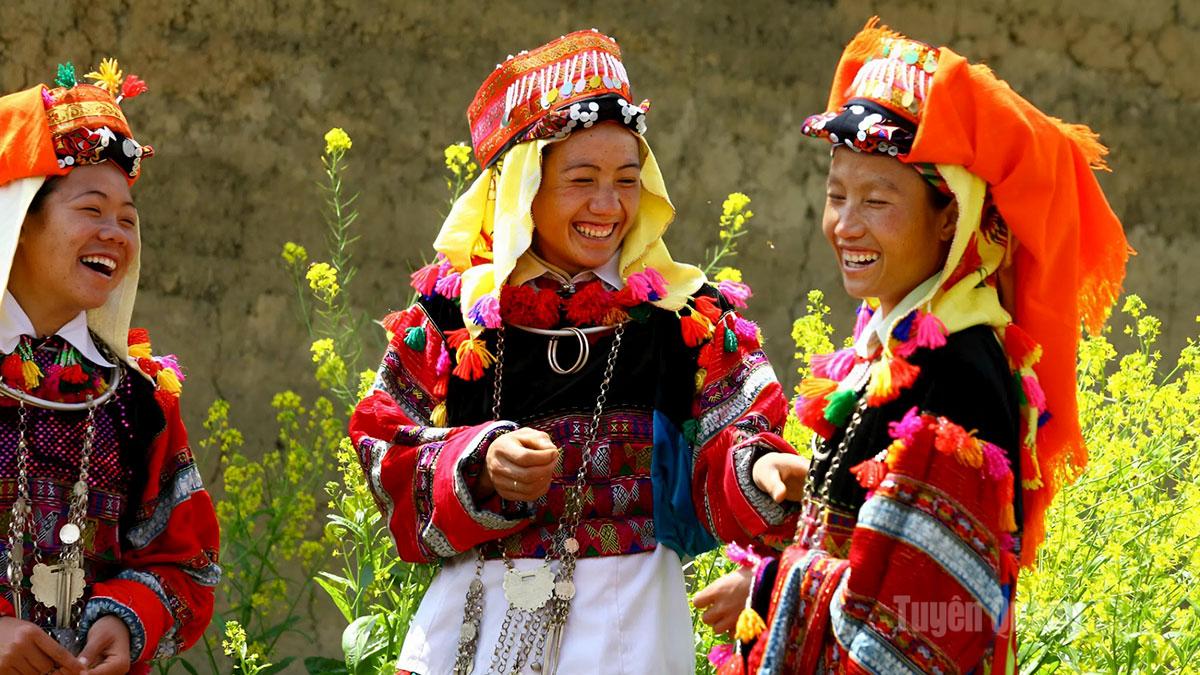
Radiant smiles of Lo Lo girls embracing the arrival of Spring
The Artistry of Traditional Attire
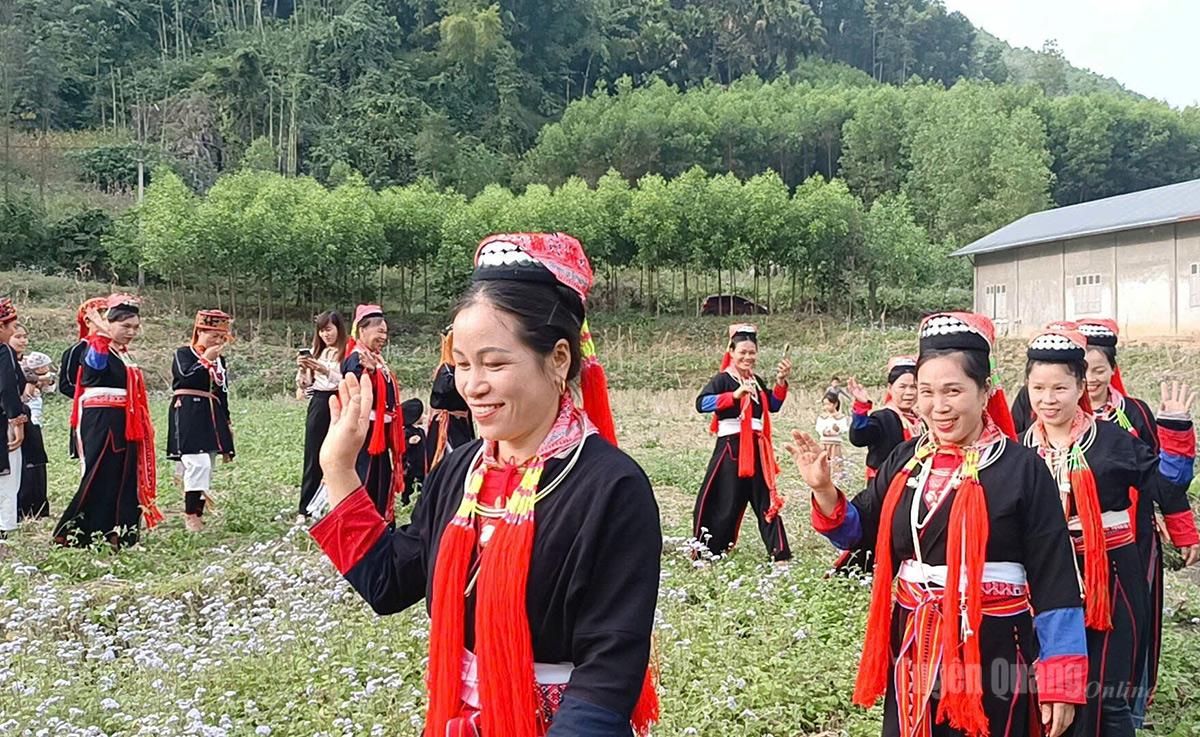
For those captivated by the highlands, the first impression often stems from the ethnic costumes. Amidst the vibrant festive atmosphere, the women of Tuyen Quang appear as radiant flowers amidst the vast wilderness, embodying a fresh and vigorous spirit of Spring.
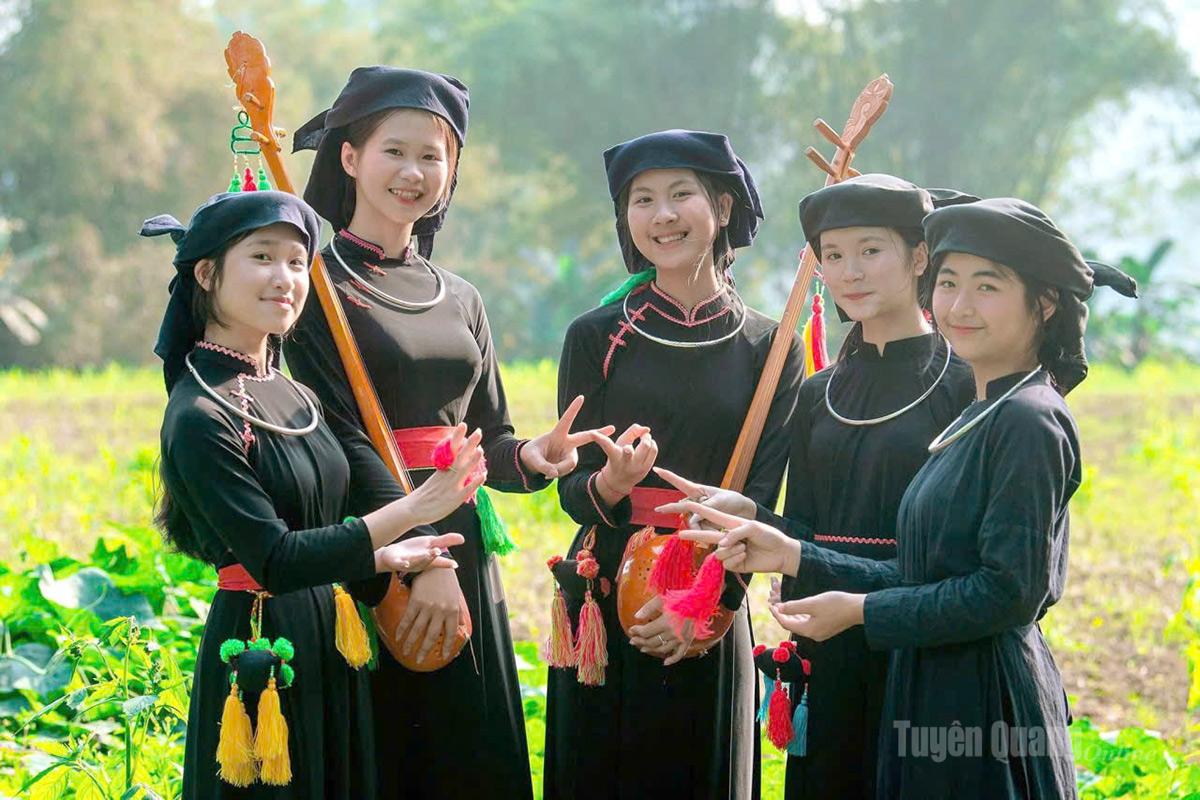
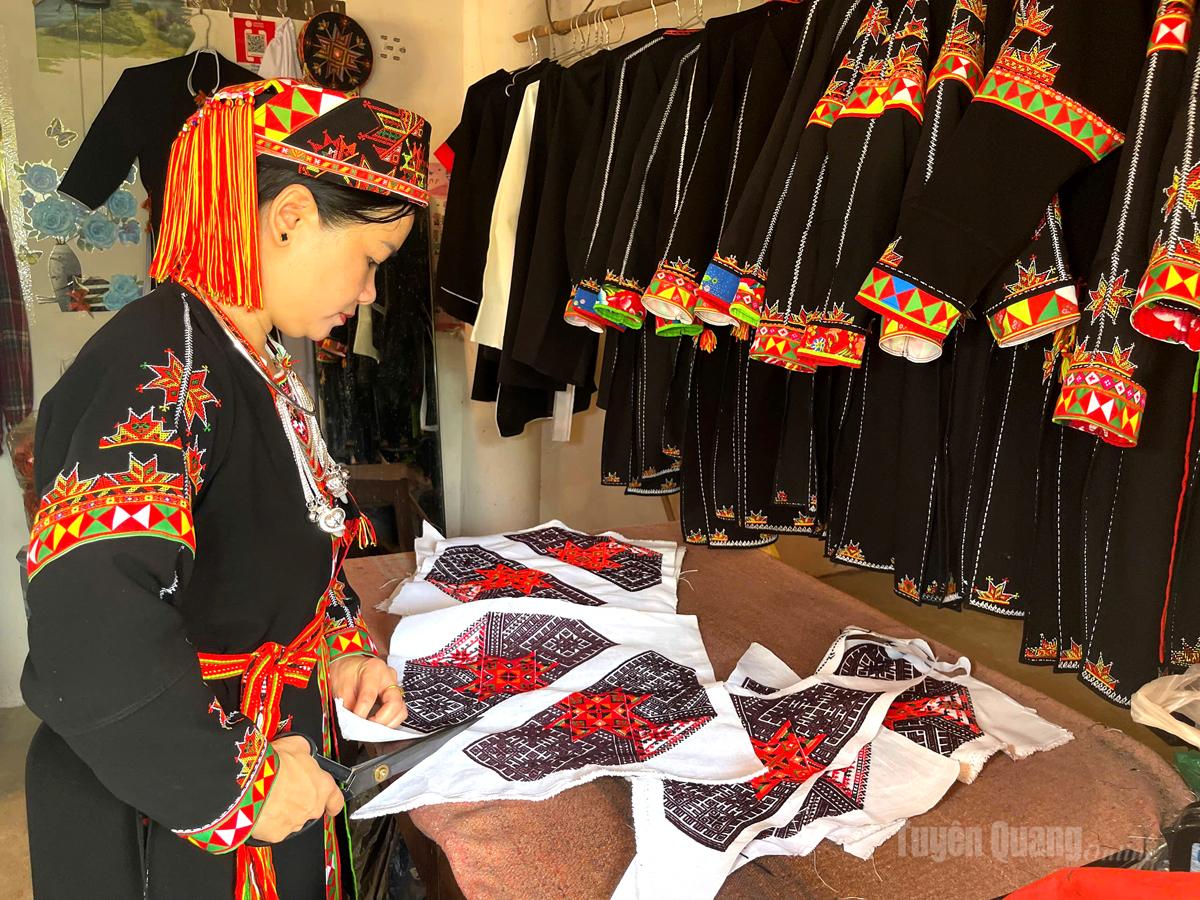
During the Long Tong Festival - a traditional plowing ritual observed by the Tay, Nung, Dao, and San Chi communities - the image of Tay women in their understated indigo dresses has become a quintessential symbol of grace. Ms. Nguyen Thị Thuyen, a teacher at Thuong Nong Kindergarten, emphasized: “Since the time of my grandmother and mother, I was taught that a Tay girl must be adept at sewing and embroidery. This is not merely a virtue; it is the pride of Tay women.”
While Tay attire exudes a sense of tranquility, the dresses of Mong maidens are as radiant as early spring sunshine. Each skirt is a meticulously hand-embroidered masterpiece, a testament to the dexterity and perseverance of the women who craft them. For the Mong people, the Gau Tao Festival - meaning the “hillside festival” - is the grandest spring celebration of the year. Following the second day of the Lunar New Year, the festival unfolds across level hillsides. Shaman Sung No Gia, from Yen Minh Commune, noted: “The festival commences with the khen dance, followed by traditional singing. Once the ritual concludes, the entire village immerses themselves in the vibrant festivities, which last until the full moon of the first lunar month.”
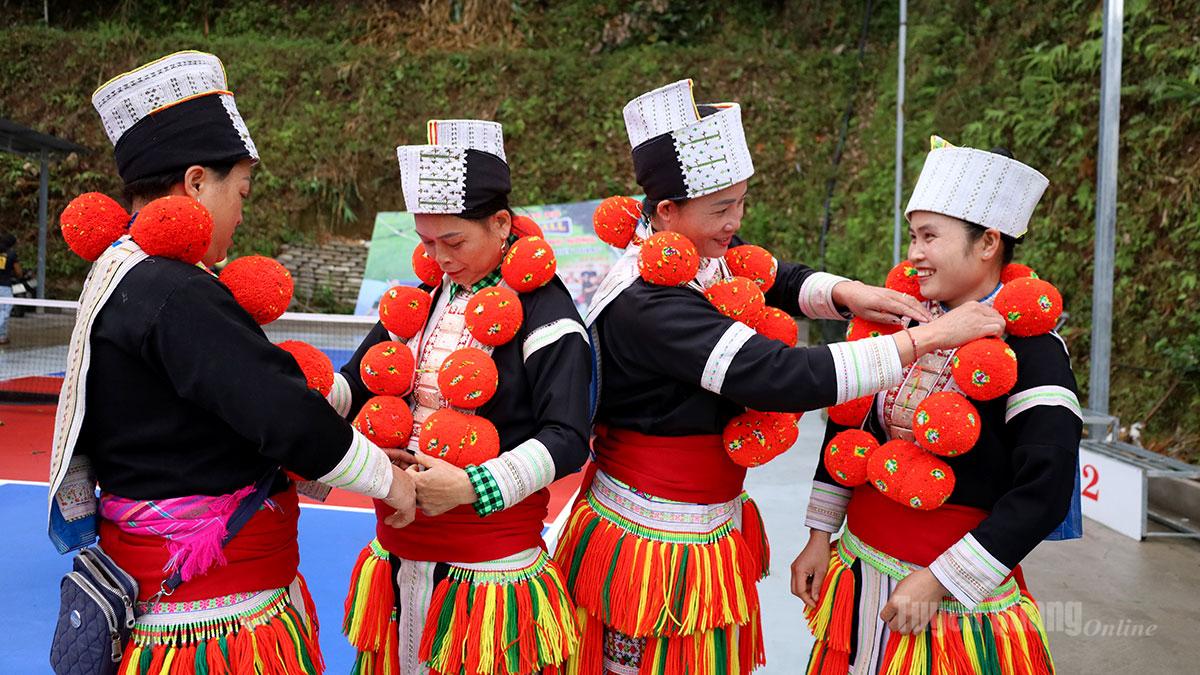
In the mystical Fire Dancing Festival of the Pa Then people, the vibrant crimson of their traditional garments stands out against the sacred night. On this red canvas, intricate threads of white, black, yellow, and blue are exquisitely woven, creating a harmonious yet dazzling ensemble. Ms. Phu Thi Xe, from Thuong Minh Village, noted: “From a young age, girls learn to weave and embroider brocade so they can personally prepare their own wedding attire.” Meanwhile, in Na Chac Village, Na Hang Commune - a place with a long-standing tradition of embroidery - Dao Do women diligently preserve their ancestral techniques. The Dao also observe the Cap Sac (Coming-of-Age) ceremony - a vital rite of passage marking a man's maturity. It is both a sacred spiritual event and a joyous occasion for the community to gather and socialize.
Distinctive Festivals
Unlike many boisterous festivals in the Northern highlands, the Lo Lo people welcome Spring with a simple yet sacred Rain-Praying Ritual. Held in the third lunar month, the ritual reflects their belief that bronze drums - symbols of the universe and humanity - have existed since the dawn of time. Mr. Duong Ngoc Duc, Secretary of the Lung Cu Commune Party Committee, emphasized: “In rituals dedicated to the Heavens, the Lo Lo utilize 'Mo Danh' drums - a pair consisting of a male and a female drum. This cosmic dualism represents the harmony of Yin and Yang, serving as sacred ancestral treasures.”
Visitors to Tuyen Quang in Spring cannot miss the Khau Vai Love Market, a sanctuary for unspoken emotions. “Khau Vai” means “intertwining rattan,” evoking an image of deep, inseparable bonds. Ms. Nguyen Hai Ha, from Minh Xuân Ward, remarked: “I came here out of curiosity about the name 'Love Market,' only to find people meeting for pure, heartfelt conversations. There are couples who come here together to visit former lovers without a hint of jealousy.”
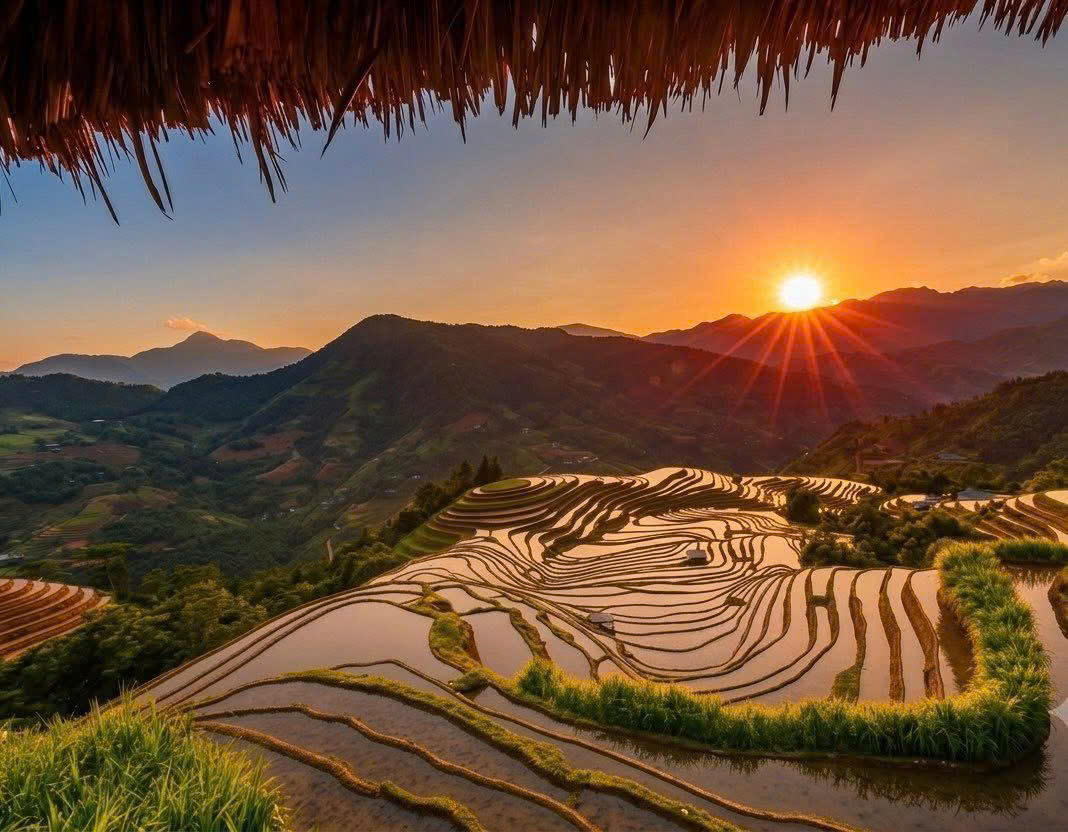
As each Spring arrives, amidst the vibrant festival drumbeats and the brilliant colors of traditional costumes, Tuyen Quang adorns itself with a fresh, new look. These spring festivals are more than just celebrations; they are a journey to preserve the cultural soul of the highlands, where people and nature harmonize in a radiant symphony of spring.
Nguyen Thanh Hieu
Vietnamese source: Tuyen Quang online